Näytetään tekstit, joissa on tunniste T-34/76. Näytä kaikki tekstit

keskiviikko 29. heinäkuuta 2026

Bottom 5 Tanks from the Parola Armour Museum

In the second blog about Parola Armour Museum I’ll list my 5 Bottom Tanks from the museum's collection. 

But we start with some basic information about the museum. The Parola Armour Museum (opened 1961) is a specialized war museum of the Finnish Tank Core. The museum preserves the traditions of the WWII era Finnish Panssaridivisioona (Armoured Division) and Jääkäriprikaati (Jäger Brigade). In the Museum there are some 100 exhibits all of whom are not on display. Several tanks in the museum are still roadworthy.

So, You may ask, why these tanks and the museum is worthy of to write about? It goes back to the year of 1944. The Soviets had unleashed their major summer offensive against Finns. Front lines were breached, defensive posts overrun. The Finnish HQ used the Panssaridivisioona and Jääkäriprikaati as a decisive elite force to stop Soviet breakouts and advances. If possible, to push them back in order to regain the lost main defensive lines in Kuuterselkä, Viipuri, Portinhoikka, Tali, Ihantala and Vuosalmi.

WWII era tanks of the museum and the men that used them in their part saved Finland from the Soviet occupation by being the necessary "Fire Brigade" to stabilize the front. However not all of those tanks were of the first class, a far cry from it. In fact some of them were so bad they even couldn't be used in the front line service.

Thus here they are: the bottom ones!


5 Soviet KV-1E Model 1940 Heavy Tank  

KV-1E at Parola 2026 © Historix

Bottom 5 and 4 tanks have a special connection between them: the reason why the KV-1 tank was developed in the first place came from the battle experiences of the Spanish Civil War 1935-1939. There Soviet T-26 light tanks had been the masters of tank combat against Italian CV L3/33-35 tankettes and German PzKpfw I tanks. The entry of a new German anti-tank gun the 3,7 cm Pak 36 (Panzerabwehrkanone) and anti-aircraft gun 8,8 cm Flak 18 (Flugabwehrkanone) changed the situation. Now it became clear for the Soviets something heavier and better armoured has to be manufactured in order to regain initiative and proper armour protection.

KV-1 was designed to meet the challenge: it had to be protected well enough to be immune against 3,7 cm Pak 36 and other modern anti-tank guns. This was achieved by making the armour protection previously unseen heavy. As a rule in order to be successful tank has to find a balance between three factors: protection, firepower and mobility. KV-1 had the protection and also firepower to to some extent, but mobility and reliability became much of an issue. Poor mobility and high weight combined with unreliable transmission and drive train made KV-1 to struggle to keep up with faster and more agile T-34/76

Despite the heavy structure of KV-1 it had no firepower advantage over the much lighter T-34/76 as both tanks shared the same F-32/F-34 tank cannon. KV-1 had very poor ergonomics and crew layout with limited visibility. This led to poor overall situational awareness - crews were essentially blind. Last, but not the least, KV-1 was significantly more expensive and slower to produce than the T-34/76.

To summarize; KV-1's heavy armour came at too high a cost in other vital areas. In fact these issues stayed unsolved leading to the cancellation of KV-1 production in 1943. KV-1 was replaced by more balanced designs like the IS series and upgraded T-34s.

Parola museum has the sole surviving KV-1E in the world. It was captured at Solomanni, north of Petrozavodsk, East Karelia, in the autumn of 1941. Finns had captured several KV-1s in various technical conditions but could take into use only two of them, one being this registered as Ps 272-1 and in Finnish use it was named as KV-1B. 

Finnish troops gave it a nickname "Pulttiklimi" or "Boltklimi" referring to sub-index E (Ekranyi = Reinforced or with Screens) which meant that the tank had additional 25 mm applique armour riveted onto hull and turret with large bolts. 

Due to mechanical unreliability and lack of spare parts KV-1E was seldom used in combat and was released from the army inventory in 1945. Today KV-1E is a very interesting and rare museum exhibit but as a fighting weapon it belongs to the list of bottom ones.


KV-1E technical data:

Weight: 45 t         

Armour: 30 – 110 mm 

Armament: F-32 cannon 76,2 mm, 2x7,62 MG

Penetration: at 90 angles at 500 m distance 69 mm with standard BR-350A AP round (initial velocity of 662m/sec)

Powerplant: V-2K, 12-cylinder diesel, 600 hp

Speed: 35 km/h    

Range: 225 km

Crew: 5 men; commander, gunner, loader, driver and assistant driver/bow gunner


4 Soviet T-26 light tank 

Early in the 1930's Soviets purchased 15 Vickers 6-ton Model A tanks and manufacturing licences from England. It marked the beginning of a Soviet nine year production run of T-26 tanks with many sub variants. There were twin turreted MG and single turreted cannon tanks, flamethrowers, bridge layers, radio controlled versions, artillery tractors and ammunition carriers as well as fire support tanks with 76 mm regimental guns and even 122 mm howitzers. Soviets produced some 10 000 gun tanks and another 2 000 specialized versions.

 Very rare T-26 Model 1933 at Parola 2026 © Historix

The combat debut for T-26 was the Spanish Civil War. There it first shined, and at the same time Spain became it's swansong. After initial successes in the last part of 1936 the role of T-26 tanks declined. T-26 suffered multiple issues like weak tracks prone to break, poor vision devices which made the crew almost blind, practically nonexistent ventilation inside the turret and troublesome 71-TK-1 radio. But the most alarming feature was the thin armour of max. 15 mm. That had been sufficient when enemy tanks had no cannons. 

Armour penetrated, T-26 at Parola 2026 © Historix
Things changed dramatically at the beginning of 1937 when Germans supplied 3,7 cm PAK 36 anti-tank guns to Nationalist Forces. 

The PAK 36 swept T-26 tanks like MG's the infantry: simply the thin armour of T-26 wasn't able to resist new German gun.
Exit holes, T-26 at Parola 2026 © Historix


Adding the unreliable mechanics of the T-26, Soviets came to conclusion to start design a completely new battle tanks on their own resources. This, after couple of years, lead to the famous KV-1 and T-34/76 series. 

The Spanish Civil War gave the T-26 reputation as the best interwar period tank
and at the same time destroyed it's fame. As the World War Two started the T-26 had already sunken to the category of bottom tanks with all its deadly shortcomings. 

Finns captured numerous T-26s in the Winter and Continuation Wars. Some 100 examples were put in the front line service until mid July 1944, the last ones retiring as conscript trainers early in the 1960's.

T-26 with penetration holes, Winter War booty, at Parola 2026 © Historix


T-26 technical data (in Soviet use):

Weight: 9,4 – 11 t            

Armour: 6 – 15 mm

Armament: 45 mm 20-K cannon, 1 – 2 x 7,62 MG

Penetration at 90 angles at 300 m distance 53 mm

Powerplant: 4-cylinder, 6,4 liter horizontal air-cooled petrol. 90 hp

Speed: 35 km/h        

Range: 340 km

Crew: 3 men; commander/loader, gunner, driver


3 Soviet T-60 M 1941 light tank

                                         ”братская могила на двоих 

T-60 Light Tank at Parola 2026 © Historix
This is how Soviet tankers named the T-60. In English it says "The Coffin for Two Brothers". The Soviet Union was attacked by Germans in June 1941 and Soviet tank losses had been tremendous. 

Soviet tank factories had been transferred to the Urals and before their output become sufficient to make good amounting losses and Lend-Lease program to take effect, Soviets had make do what they got. That wasn't much and  in the desperation even stopgap T-60 tanks were sent to fight German Panzers. Soviet tankers' losses were predictably horrifying.

T-60 had a 20 mm TNSh-1 automatic cannon as a main weapon. The cannon, actually a modified aircraft gun, couldn't penetrate the frontal armour of German tanks from mid-1941 onward. Though it could deal with lighter vehicles, half-tracks or side/rear shots on early tanks at close range. This limited the tank mostly to infantry support and recce roles. Failed attempts were made to up-gun the T-60 with 37 or 45 mm cannons. These led to the development of better armed T-70. 

T-60 shows the 20 mm cannon at Parola 2026 © Historix

Finns captured one T-60 in the summer of 1944 at Portinhoikka, on the Karelian Isthmus, while fighting a decisive defensive battle by stopping the advancing Soviet elite Guards tank formations dash to the inner part of Finland. T-60 never served with the Finnish army - perhaps it was only better that way. Since the T-60 definitely belongs to the bottom tanks.  


T-60 technical data:

Weight: 6,4 t            

Armour: 7 – 35 mm

Armament: 20 mm TNSh automatic cannon, DT MG 7,62 mm

Penetration: at 90 angles at 500 m distance 15 mm

Powerplant: Gaz 202 6-cylinder petrol, 76 hp

Speed: 45 km/h        

Range: 450 km

Crew: 2 men; commander/gunner, driver


2 Finnish BT-42 Assault Gun 

What You expect the outcome to be if You take two obsolete weapon, put them together and hope to get a sound fighting combination? In 1942 Finns tried to get this done. Predictably the outcome was just one more tank straight into the Bottom Tank list.

Just before the start of the Continuation War, June 1941, Finns had a tank core of some 200 tanks, armoured cars or armoured tractors. Most of those were captured from the Soviet Red Army in the Winter War. However, of these Finns could field only some 50 battle worthy tanks. These were the British Vickers 6-ton tanks purchased to Finland before the Winter War (now equipped with captured Soviet 45 mm cannons) and war booty T-26 tanks of various sub-models.

German Panzerwaffe was taken as an example for the Finnish tank core how to improve and develop its structure and tactics. That in mind Finns formed in first half of the 1942 the Panssaridivisioona (Armour Division).  It was done to replace the 1941 Panssaripataljoona (Armour Battalion) by adding new units to the composition of new Armoured Division. The main units of the body being HQ, Jääkäriprikaati (Jäger Brigade) and Panssariprikaati (Armoured Brigade). These were supported by Artillery-, Engineer-, Armoured AA- and Assault Gun Battalions among others and Quartermaster's Corps. 

Now the BT-42 enters the stage: at the time Germans were unwilling to sell modern equipment to Finland, such as assault guns like Stug40. With no other options available, the Finns decided to build their own. In 1942 they took captured Soviet BT-7 tanks - already known to be unreliable and largely unusable - and rebuild them into a Finnish assault gun.

Lets have a look how it materialized. Timo Teräsvalli writes:

"The turrets of BT-7 tanks were renewed, and British howitzers of caliber 114 mm, year-model 1918 were installed. The new turret was large and sighting- and viewing equipment sorrowful."

And what can be said about the BT-7 chassis itself? 

"The vehicle was indeed fast, but constantly suffered from all sorts of technical faults. The tracks often slipped off, and the track/road wheel changing mechanism was a poor concept". 

Not much good it seems. What about the BT-42 in combat, how did it score? There was just one battle in which BT-42s took part. It was quite a significant one as well: to help the 20. Prikaati (20. Brigade) to defend the second largest city of Finland in 1944 - Viipuri, modern day Russian Vyborg in the Karelian Isthmus.

So, how did it go - the battle? Mr. Teräsvalli describes the situation:

"The explosive squash head (HESH) grenades from the old British howitzer had no effect on the Red Army tanks."

In fact one of the BT-42s hit enemy tank 18 times with no results. Respectively the very same enemy tank fired eight rounds back and scored no hits! 

In Viipuri there were 9 BT-42 assault guns taking part to the defensive battle. Five (5) of them were lost during the fight. Other four ones withdrew the battleground. After the Battle of Viipuri all but one were scrapped. Good riddance, I suggest, their crews must have thought. Today the one remaining BT-42 is preserved at the Armour Museum of Parola.

The BT-42 at Parola 2026 © Historix

P.S. the sorrowful career of BT-42s was a result of misunderstood tactical use as an anti-tank weapon. Had it been used as an armoured mobile indirect fire artillery against infantry, it would have been a sound weapon system with its potent HE round.


BT-42 technical data (in Finnish use):

Weight: 15,5 t            

Armour: 6 – 22 mm

Armament: 114 mm H 18 howitzer, velocity of 345m/sec)  

Penetration: HE and HESH round, armour penetraton almost nil

Powerplant: M-17T, V-12 petrol liquid cooled, 450 hp

Speed: on tracks 52 km/h, on wheels 72 km/h       

Range: on tracks 230 km, on wheels 500 km

Crew: 3 men; commander/gunner, loader, driver


1 British Vickers-Carden-Loyd MkVI tankette

Finally the number one on my list. To be precise, it's not really a tank. We better characterize it as a tankette. That is to say a small tracked combat vehicle, usually with only two man crew, lightly armoured just to stop bullets and usually with no rotating turret. Armament consisting only machine guns of various calibers. One might not expect much of a fighting capabilities with this kind of mix. Still in the 1920's-1930's this concept became surprisingly popular. How that came to be?

To find an answer we must look at politicians and money. Tankettes were cheap and easy to produce by great numbers. The numbers and at the same time saving costs seemed to be more important than to produce for the army capable tanks. The concept was born in Great Britain but was widely accepted by various armies around the world. Some nations purchased tankettes, others bought their manufacturing licences.

One of the most notable tankette is the British Vickers-Carden-Loyd MkVI. It was copied by Italy (CV L3/33 - 35), Poland (TK, TKS), Czechoslovakia (Tancik vz. 33), Japan (Type 94) and Soviet Union (T-27). 

Vickers-Carden-Loyd MkVI at Parola 2026 © Historix

Tankettes fought on during the 1930's in Bolivia Chacao War between Bolivia and Paraguay, in Abyssinia (modern day Ethiopia) as Italy invaded and colonized the country, in Spanish Civil War and by Polish Army trying to stop the invading German forces in 1939. Needless to highlight the fact: tankettes were of little combat value. 

MkVI Produced in July 1933 © Historix

That's why they were phased out of service or were relegated to secondary roles after the early stages of the Second World War. With the exception of Italy, whose tankers had to fight on with their tankettes in North Africa 1940-1943. Germans used captured Polish TKS-tankettes as a security vehicles around airfields in Norway. Soviet T-27 was seen in the front lines of the Eastern Front 1941 but soon vanished the scene.

In the early 1930's Finland was seeking for replacement to its ageing and obsolete fleet of Renault FT-17 tanks. That's why an order of four Vickers tanks were made for trials. One of these was MkVI tankette. It had several serious drawbacks: in summer MkVI became unbearable hot for its crew due to engine which lay unprotected between the two crew members. It was armed only with one 7,7 mm MG and the armour protection barely managed to stop rifle bullets. Its cross-country mobility was weak and the engine kept interiors very noisy.

After the trials Finns selected wisely another option for their new service tank. The chosen one was Vickers 6-ton Tank type E.


MkVI has got some style of its own © Historix

And there You have it: my choices for the 5 Bottom Tanks from the collection of The Armour Museum of Parola.


Vickers-Carden-Loyd Mk VI technical data:

Weight: 1,36 t            

Armour: 4 – 9 mm

Armament: 7,7 mm MG

Powerplant: Ford four cylinder petrol, 40 hp

Speed: 45 km/h        

Range: 160 km

Crew: 2 men; commander/gunner, driver


Notes


Soviet KV-1E Heavy Tank

1. Zaloga, Steven J. KV-1 & 2 Heavy Tanks 1939-45. p. 6-11

2. Teräsvalli, Timo. The Parola Armour Museum. p. 32-33

3. Green, Michael. Russian Armour in the Second World War.p. 117-126

Soviet T-26 Light Tank 

1. Teräsvalli, Timo. The Parola Armour Museum. p. 25-27

2. Zaloga, Steven J. T-26 light tank. p. 4-5

3. Green, Michael. Russian Armour in the Second World War.p. 20-25

Soviet T-60 Light Tank

1. Teräsvalli, Timo. The Parola Armour Museum. p. 41

2. Green, Michael. Russian Armour in the Second World War. p. 19, 28-32

3. Kantakoski, Pekka. Panssarimuseo. p.24

4. Grog AI

Finnish BT-42 Assault Gun

1. Teräsvalli, Timo. The Parola Armour Museum. p. 29-31

2. Käkelä, Erkki. Panssaridivisioona 1942-1944. p. 170-175

3. Haapanen, Atso. Suomen Panssariase 1918-1944. p. 81, 96-97, 127

4. Zaloga, Steven J. BT Fast Tank The Red Army's Cavalry Tank 1931-45. p. 44

British Vickers-Carden-Loyd MkVI Tankette

1. Teräsvalli, Timo. The Parola Armour Museum. p. 15-16

2. Kantakoski, Pekka. Panssarimuseo. p. 10-11

3. Grog AI


sunnuntai 15. tammikuuta 2023

Top 5 Tanks with Historix – Armour Museum of Parola, Finland

In a small municipality of Hattula, Southern Finland, lies an interesting tank museum. It may not be the largest of tank museums, but its collection is quite unique and well worth to see. 

Finns had to fight two times in a row to keep their freedom as the Soviet Red Army tried to occupy Finland in the Second World War. Thus, through the Winter and subsequent Continuation War, Finns captured a good bunch of Soviet war materiel, most notably a collection of tanks. Some of these vehicles are so rare that there are only one or two other examples existing outside the Armour Museum of Parola – that is to say in a Russian main tank museum in Kubinka near Moscow.

In this blog text I’ll list my personal Top 5 Tanks from the collection of the Armour Museum of Parola. To be honest five isn’t in no way enough, there are plenty more of worthy tanks to include into the list. But let's start with these Top 5 Tanks.


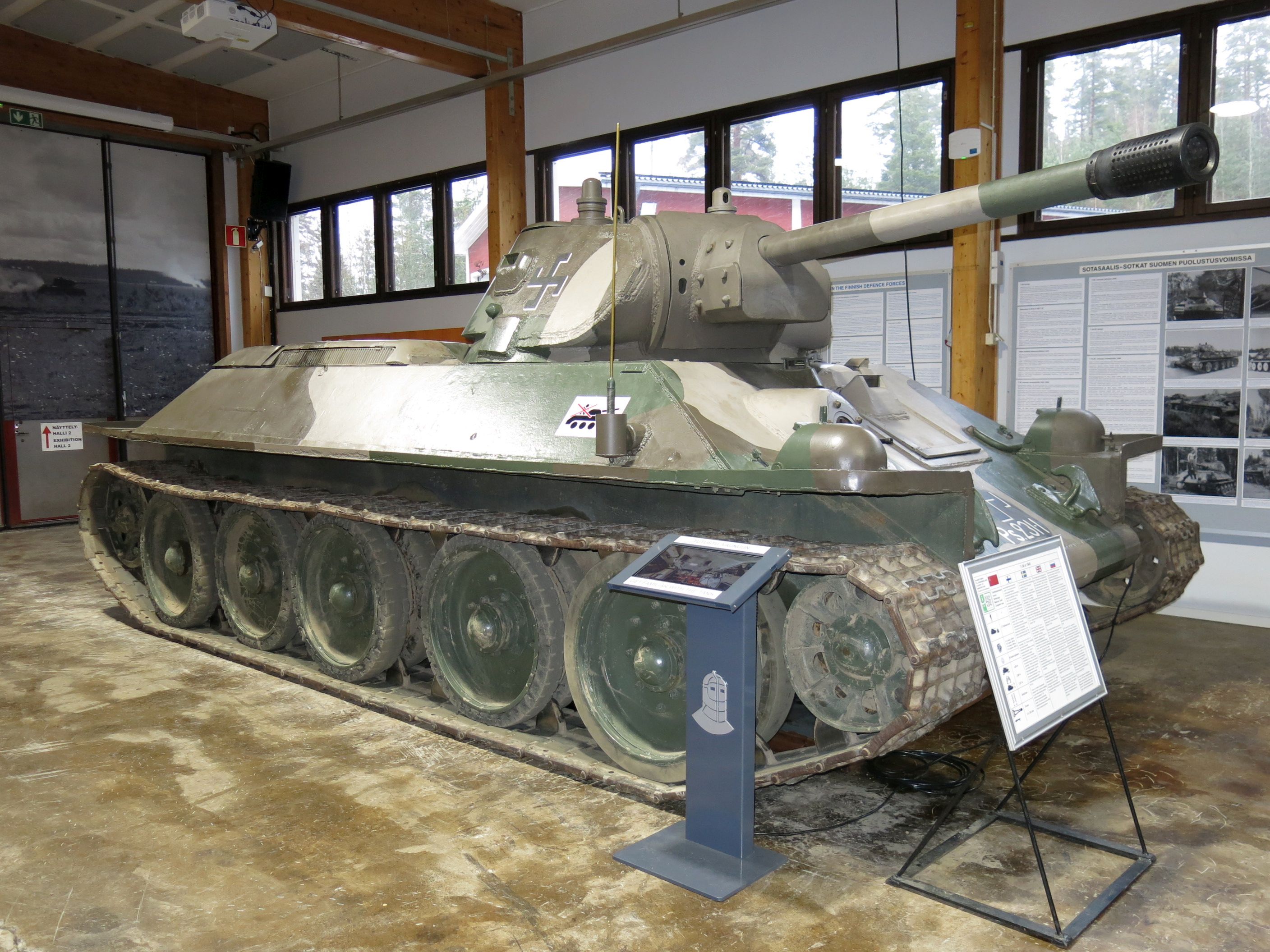
5     T-34/76A (early pre-Barbarossa production model 1941)

This Soviet tank was a nasty surprise for the Wehrmacht as it was fighting its way to the Ukraine in the summer of 1941. The infamous German 6th Army with the support of the 1st Panzer Group met with T-34/76 and had to fight the new Soviet type with tanks and anti-tank weaponry of inadequate firepower and armour protection.

T-34/76 in Parola 2023 © Historix
 

Technically considering T-34/76, the ”Sotka” or ”The short barreled Sotka” as Finns nicknamed it, was a failure. Biggest issue being the powertrain. Medium tank T-34’s gearbox and clutch derived from the much lighter BT-7 tank and did not work well in a heavier weight class. This, combined with the fact that the technical and service support for the Red Army’s armoured forces left a lot to be desired. That leading to the acute lack of spare parts, which resulted in numerous breakdowns and losses of the otherwise usable tank. The design of T-34 was superbly suited for mass production, but in use it was not nearly as good.

Although T-34/76 was a technically unreliable, initially had no radios, it was essentially blind with a very bad vision blocks, periscopes, or prisms and with no cupola, it was well armoured with sloped plates, had an effective cannon and a good mobility (when in usable status). Importantly, the T-34 managed to do its job by slowing the attacking Germans down and later forming the tank masses which broke through the German lines all the way to Berlin. T-34/85, the upgraded and upgunned version, kept on soldiering even through the years of the Cold War receiving two major modernization programmes in 1960 and as late as in 1969. Quite a way to go for this iconic Soviet tank. Still not necessarily the best tank of The Second World War, but a very suitable asset for the Soviets considering their climate, capabilities of their tankers and industrial output and the military doctrine in use.

T-34/76A technical data:
Weight: 27 t            
Armour: 20 – 45 mm, front armour sloped at an angle of 30 degrees (3x stronger than same vertical plate)
Armament: F-34 cannon 76,2 mm. Penetration at 90 angles at 500 m distance 69 mm. 2x7,62 MG
Powerplant: V-2, 12-cylinder diesel, 500 hp
Speed:    55 km/h    
Range: 230 km
Crew: 4 men; commander/gunner, loader, driver and assistant driver/bow gunner


 4    Vickers-Armstrongs 6-ton, Type E  

Early in the 1930s the Finnish army realized its mainstay tank, the French Renault FT-17, had become obsolete and needed to be replaced by a modern tank. Thus in 1931 Finns purchased from England four different tanks for evaluation. One of them was Vickers-Armstrongs 6-ton, type B. At the time it was the most advanced design in the market. Finns were satisfied and presented an order of total 36 type E tanks. New British tanks were the only battleworthy ones when the Winter War started.


Vickers-Armstrongs 6-ton in Parola 2023, © Historix


Soviets had on the other hand begun to produce various sub types of Vickers-Armstrongs tanks in the 1930s under the name of T-26. The overall construction and engine of the Soviet variant was cruder, but it had a long barreled 45 mm cannon, which made it the premier tank of the inter-war years and the winner of tank battles in the Spanish civil war of 1930s. As the Second World War started the T-26 had become the backbone of the Red Army tank corps, and before long the Finnish too. In the Soviet Union the bulk of T-26 tanks were lost by end of 1941. Whereas in Finland Vickers-Armstrongs and the captured Soviet T-26 variants were in service until 1959.  The Soviet Union sold Finland T-54 tanks in 1959.  These became the first post-war era modern battle tanks in Finnish service thus sending the 6-tons and T-26s into the museum.


Same tank, another angle 2023, © Historix


Finns and Soviets were not the only users of the 6-ton tank. Although the British Army rejected the type, it was exported to various countries like Poland, Bolivia, Thailand, China and Bulgaria where it was used in a various conflicts and battles. That's why this tank was quite a remarkable design after all and deserves to be remembered. And by the way the tank in display at Parola is the sole surviving example of the type in the world.

© Historix

Vickers-Armstrongs 6-ton, type E technical data (in Finnish use):
Weight: 8,6 t            
Armour: 6 – 17 mm
Armament: Bofors cannon 37 mm. Penetration at 90 angles at 300 m distance 56 mm. Submachine gun
Powerplant: 4-cylinder, horizontal, air-cooled petrol. 87 hp
Speed: 35 km/h        
Range: 165 km
Crew: 4 men; commander/loader, gunner, driver and bow submachine gunner


3    Comet Mk. I

Eleven British cruiser tank designs were produced between 1934 and 1945. Some never saw enemy action at all and were retained for training purposes; others saw action but were no match for the German machines. Only two of the designs were really satisfactory – the Meteor-engined Cromwell and the up-gunned Comet variant.” This is how Pat Ware so aptly describes the troubles Brits had finding a way to build a sound cruiser tank. And it wasn’t any better with infantry tanks either.

Enter the Comet Mk. I with a 77 mm gun. Well, the gun was related to 17-pounder (76,2 mm) but had its own classification. What was crucial here was the successful balance of firepower, armour protection and mobility the Comet had. Of course, when talking about British tanks, also reliability had to be considered. The Comet triumphed all these aspects and became a superior Tiger or Panther killer with its new high-velocity armour-piercing discarding sabot (APDS) round.

The Comet came a bit too late to make a difference in the Second World War, but its real contribution was to put the British tank designing back in track after several dismal failures in the past. Comet pioneering the development, the subsequent models became successful and able machines of war: think of the Centurion with a Royal Ordnance L7 cannon or Challenger II. That’s why Comet is number 3 on my list.


Comet on a display run at Parola, © Historix

Comet Mk. I technical data (in Finnish use):
Weight: 33 t            
Armour: thickest 106 mm
Armament: OQF 77 mm HV cannon. Two 7,62 mm MG
Powerplant: Rolls-Royce Meteor V-12-cylinder, liquid-cooled petrol. 600 hp
Speed: 51 km/h        
Range: 198 km
Crew: 5 men; commander, gunner, loader, driver and bow MG gunner


2     PzKfpw IV Ausf. J

There are just a few tanks or other combat vehicles that have done such a career as a German Panzer IV. Wehrmacht’s Panzertruppen used it from the Polish and France campaigns via East Front against the Russians all the way to the sands of the North Africa to fight the British 8th Army.  Panzer IV was produced and in active combat use for the duration of The Second World War, and it comprised 30 % of Panzertruppen’s tank strength. It was widely exported to the German allies. With its numerous variations Panzer IV saw combat to the bitter end of the Third Reich. But the story does not end here.

Panzer IV kept on going after the war. It was used at least by Finnish, Turkish, Spanish and Syrian Armed Forces. On the battlefields of the Middle East Panzer IV, used by Syrians, fight the Israeli M4 Shermans and later Centurions. Finnish Army received in the summer of 1944 only 15 Panzer IVs from the promised batch of 30 tanks. That was worth of just one tank company. A number which was further diminished after the war by a tank warehouse fire at the Army Technical Depot. Surviving Panzer IVs were taken for training service. Today one remaining example of Panzer IV stands on the exhibition slope of the Armour Museum of Parola. And is the number two on my Top 5 Tanks list.


Panzer IV Ausf. J with Finnish markings, © Historix

PzKfpw IV Ausf. J technical data3 (in Finnish use):
Weight: 25 t            
Armour: 20 – 80 mm
Armament: 7,5 mm KwK L/48 cannon. Penetration at 90 angles at 500 m distance:
HE 140, APDS 160, HEAT 93 mm.  Two 7,62 MG2
Powerplant: Maybach HL 120 TRM V-12, 11 867 cc petrol, 300 bhp at 3000 rpm
Speed: 38 km/h        
Range: 270 km
Crew: 5 men; commander, gunner, loader, driver and bow gunner/radio operator


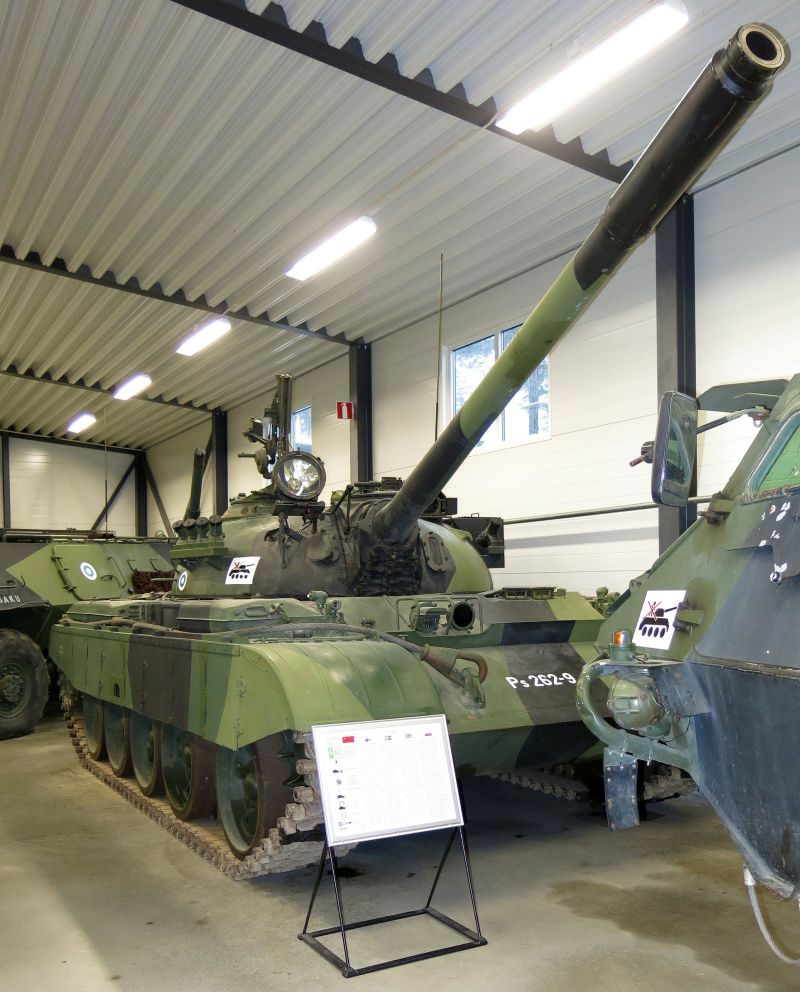
1    T-55

T-55M in 2023, © Historix
It has been said that T-54/55 family of tanks are the most important
ones of the post-World War Two period almost to the end of the Cold War when they finally became obsolete. The sheer number of manufactured tanks (even 100 000 examples) and its extensive combat career on the battlefields of Vietnam, Angola and the Middle East over the past half-century makes this Soviet medium tank special.

Made to be easily used and maintained, in whatever climate, even with low trained personnel, T-55 made itself a true universal tank of its period. It was the last of an all-steel armoured Soviet design, the age of composite armour made T-55 and its failed successor T-62 obsolete.

For me personally T-55 is a very important tank. In Finland there are three major military parades: the Independence Day, Marshal Mannerheim’s birthday and Tank Forces anniversary. As a kid and a youngster, I was always there in a front row watching T-55s passing by with earth trembling under my feet, air filled with black and blue diesel fumes and V-54 engine roaring its wonderful growling V-12 sound. The sound of something historic, the sound, in fact, of the same engine used in T-34 tanks.

T-55 on the training ground, © Historix

T-55 technical data (in Finnish use):
Weight: 36 t            
Armour: 20 – 200 mm
Armament: D-10TG cannon 100 mm. Penetration at 90 angles at 1000 m distance 150 mm. Two 7,62 MG
Powerplant: V-54 diesel, V-12-cylinder water cooled giving 520 hp at 2000 rpm.
Speed: 50 km/h        
Range: 500 km
Crew: 4 men; commander, gunner, loader and driver


Notes


T-34/76A

1. Teräsvalli, Timo. The Parola Armour Museum. p. 36

2. Kavalerchik, Boris. The Tanks of Operation Barbarossa. p. 149

3. Kavalerchik, Boris. The Tanks of Operation Barbarossa. p. 150

4. Green, Michael. Russian Armour in the Second World War. p. 81


Vickers-Armstrongs 6-ton, type E

1. Zaloga, Steven J. T-26 light tank. p. 4-5

2. Kantakoski, Pekka. Panssarimuseo. p. 16, 47


Comet Mk. I

1. Ware, Pat. British Tanks: The Second Word War. p. 31


PzKfpw IV Ausf. J

1. en.wikipedia.org/wiki/Panzer_IV

2. Teräsvalli, Timo. The Parola Armour Museum. p. 50

3. Quarrie, Bruce. Encyclopaedia of the German Army in the 20th Century. p. 199-200


T-55M

1. Zaloga, Steven J. T-54 and T-55 Main Battle Tanks 1944-2004. p. 3

2. Tucker-Jones, Anthony. T-54/55 The Soviet Army’s Cold War Main Battle Tank. p. 16-17

3. Teräsvalli, Timo. The Parola Armour Museum. p. 63


lauantai 25. heinäkuuta 2015

Red Army Tank Commander on the Tiger Hunt

Vasiliy Krysov, the Panzer Destroyer, was an extremely lucky Red Army soldier to survive the war to tell his story in this book. He started the fighting at Stalingrad, soldiered on through the massive tank battle of Kursk, crossed the mighty river of Dnepr to liberate Kiev and finally ended up his war capturing Königsberg, present time city of Kaliningrad in the former East Prussia. His first assignment was to be the leader of a KV-1S tank. Not before long he changed over to the assault guns. There he was to become a platoon and soon a battery leader having as a tool of war SU-122 self-propelled howitzer and later SU-85 tank destroyer. Krysov ended up the fighting commanding the best battle tank Russians could offer: the T-34/85. There are 15 chapters in his memoirs leading the reader from the initial tank training boot camp to the fighting and post war officer training school in Leningrad. The reader is pleased to use fine tactical maps, Index and helpful Notes to amplify the experience.  Although there are just few pictures available in the book, they give an interesting and rarely in the West seen insight to the world of Soviet tankers.

Panzer Destroyer opens up the game with no modesty. On the 29 the of July 1942 there was a battle of Lipologovo taking place in a village near Kalats na Don. Krysov claims the Soviets captured there thirty Panzer IV -tanks and other armoured vehicles intact while Germans, horrified by Katjusha rocket launchers, fled the battlefield.

It gets even better as he describes the battle of Jastrebenka village near Kiev in November - December 1943: he claims he destroyed as many as eight Tiger I -tanks with his own SU-85 self-propelled gun. The opposing troops were no less than the elements of 1st Waffen-SS Panzer Division Leibstandarte Adolf Hitler. It becomes clear what is the main issue of this book - it is exaggeration, we may even say hyperbole. In the book Germans are presented as an incompetent and weak combatant. One may wonder why and by whom there were any casualties on the Soviet side at all. Krysov says he once saw an entire German infantry company equipped with submachine guns. That's not very likely to be true. It was customary for Germans to have Kar98k rifle as a standard weapon for infantry soldier, submachine guns were reserved for squad leaders or other officers. What really may amaze the reader is the number of Tiger I –tanks Krysov claims to have seen or destroyed on the battlefield. Where did all these Tigers come? Since Tigers were a scare resource deployed only with small numbers to the elite Waffen-SS troops and the Gross Deutschland elite Wehrmacht division.

On July 1944 Krysov, with his unit, crossed the river Bug into a "neighbouring country" as he labels the territory of the East-Poland. Thus he actually approves and confirms the notorious Molotov-Ribbentrop -pact and the partition of Poland between the Nazi-Germany and Soviet Union.  Battles fought alongside the crossing gave Krysov more fame, at least he thinks so. He claims his battery of five SU-85 self-propelled guns destroyed uncounted numbers of Tigers of the 5th Waffen-SS Panzer division Wiking by penetrating Tigers through the frontal armour with their 85 mm D-5T cannons. Near the Polish village of Stulno Krysov and another SU-85 backed up with some submachine gunners destroyed a whole German motorized infantry regiment.

How to call the enemy, that's the question for Krysov! He fought from Stalingrad to Königsberg, it was a long and hard way to go. Through the time - until the very end - he confronted, according to his statement, Germans, Fritzes, Nazis and Fascists. He does not mention having any battles against Italians. So we can count out Fascist forces, especially when Italy withdrew from the Eastern front after the disaster of Don late 1942. Why does Krysov claim to have a fight against fascists when there was no such opponent around? Fascists were Italians who wanted to build corporate state according to their view of socialism. Fascists were not the Nazi-German Wehrmacht forces you might think. Why all this controversy? The answer is quite simple: Stalin wanted to fade out any logical links between the two rivalling forms of socialism, which were the Soviet International communism and German National socialism. It was imperative for the Soviets to obscure the reality of the struggle of two similar ideologies by labelling Germans as Fascist or Fritzis (the latter was a non-political, more like a nation based definition). Unfortunately comrade Stalin was more than successful in his mission to misinform, since even the modern day media in the western world can not make a clear distinction between the two. So even today we have to read news where reporters do not have any clue of realism or they are constantly abusing political terms. To make it simple: Nazis, Fascist and Communists were all the same leftist lot! It was only a matter of details which made the difference between them, like the question: are you for nationalism or internationalism?

The strength of the book can be found in its occasionally presented honesty. For instance, Krysov openly describes one of the dubious practices of the Red Army, that is to say the PPzh front wives. The name is a reference and Russian language wordplay to the famous PPSh -machine gun. Again, in this book it is easy to see how the Red Army officers or Stavka did not have much sympathy at all for their subordinates.  On one particular occasion, near Königsberg, Krysov had to roast some loaves of bread in a frying pan using engine oil as a substitute for frying fat.

Krysov claims he destroyed 19 tanks and set on fire 12 ones. Of those, he says, eight were Tigers and one a Panther. He was never decorated nor mentioned by the Red Army.  It seems his story contains a strong element of personal bias. For instance he can’t understand why German civilians fled to the West as the advancing Red Army was approaching their homes. Krysov concludes the German civilians were merely betrayed by the Fascist propaganda to flee. After all this being said the memoirs of Vasiliy Krysov give an interesting and vividly told insight to the everyday life and fighting of the Red Army tankers.

Kryzov, Vasiliy: Panzer Destroyer - Memoirs of a Red Army Tank Commander, English translation by Vladimir Kroupnik, Pen & Sword, Barnsley 2010, 205 pages.


About the armoured fighting vehicles used by Vasiliy Krysov


Soviets had in the early 1930s started their tank mass production by either buying licences (T-26) or simply copying foreign models (T-28, T-35, BT-tanks). The Spanish civil war, Hahin-Gol skirmishes against the Japanese tanks and the Russo-Finnish Winter war had clearly shown the need for a new generation of tanks.

The rise of Nazi-Germany made the modernization programme a priority for the Soviet Union. Thus a new range of airplanes and AFVs were introduced at the opening stages of the Second World War. The Soviet tank core received two battle tanks, KV-1 and T-34/76, which were to play key roles in the battles ahead. The latter one would prove to have a huge and profound impact on the tank design and the history of armoured warfare.


KV-1S

KV-1S
Wikimedia Commons

The first of the new tanks to reach the front line service was KV-1 also known as Klimenti Voroshilov. The name of the KV-1 was carefully chosen. The father-in-law of the chief designer of the tank, S. Kotin, was no one else than the Marshall of the Soviet Union Klimenti Voroshilov. He was then the People’s Commissar for Defence of the Soviet Union and close aide to Stalin himself.

S. Kotin saw it clearly how the single turreted prototype of KV-1 was far superior to the two or more turreted vehicles. To verify his testing results KV-1 was sent in December 1939 to the Russo-Finnish War. While in the Karelian Isthmus the new tank was designated to infantry close support role. The positive demonstration of ruggedness and combat survivability led to the decision to start mass production of KV-1 in December 1939.  The KV-1 shared some components with T-34. Both tanks had the same engines and later on same main gun, the 76,2 mm F-34 (for the KV-1 the gun was named ZiS-5). As the KV-1 was more than 10 tonnes heavier than T-34, it was natural that speed, off road manoeuvrability and ground pressure values of the KV-1 were inferior. The mechanical reliability of the tank was dismal; especially this was true with the powertrain of the tank. However, the KV-1 was heavily armed and armoured. It proved to be a formidable opponent on the battlefield.

Germans had no tank to put up against the KV-1 in the summer of 1941.  The only effective way to kill a KV-1 was to either call Junkers Ju-87 Stukas in or try shoot it with 8,8 cm FlaK 18 Anti-Aircraft cannon. On the other side KV-1 had poor cross-country manoeuvrability, mechanical defects and almost non-existing optics to observe the battlefield. In fact if the hatches were closed, the KV-1 was virtually blind. To make things worse the crew layout was poorly-designed: the vehicle commander was at the same time employed as the gun-loader and he did not have his own hatch or cupola to monitor the battlefield. There was an obvious need for upgrade.

To fix the well known defects of the KV-1 a new version came out of production lines in August 1942. The new design was called KV-1S, suffix S stood for skorostnoi – speedy.  KV-1S was much lighter due to thinned armour: protection had been traded for mobility. Improved powertrain and overhead armoured cupola for the tank commander to observe the battlefield were among the upgrades. The turret had been totally redesigned.  While it was smaller it housed a dedicated tank commander as the fifth crew member. This is how the Soviets learned to follow the German crew layout which had proved to be superior. Despite the upgrades KV-1S was manufactured only for the period of one year. After 1370 units were completed the arrival of new heavy German Tiger and especially Panther tanks made KV-1S obsolete. To meet the new opponents the Soviets composed an interim model of KV-85 while waiting for their own ‘heavies’ like IS-2.

The KV-1S tanks rolled out of production lines just in time to take part of the battle of Stalingrad. In fact, Krysov had his tank from the Stalingrad Tractor Factory overhaul line to have his baptism of fire.


KV-1S technical data

Weight: 42,5 ton
Crew: 5 (commander, gunner, loader, driver, co-driver)
Engine: V-2K-s, four-stroke V-12 diesel, liquid cooling
Max horsepower: 600 hp / 2000 rpm
Power to weight ratio: 12,9 hp / ton
Top speed: 42 km/h
Range: 250 km
Ground pressure: 0,72 kp/cm2
Steering system: clutch-brake
Suspension system: Torsion bar
Gearbox: forward / reverse 5 / 1
Armour thickness: 82-30 mm
Communication: radio and intercom
Main gun: 76,2 mm ZiS-5 / 41,5 calibre

Penetrating performance of the standard armour-piercing round against steel armour at 90 degree angle from 500 metres: 92 mm


T-34/85

T-34/85
 Foto © Historix

The real flagship and legacy maker of the Soviet tank industry saw its birth in the summer of 1939 as the upgraded prototype of A-34 emerged. This version would later be known as the T-34/76 medium tank. Actually the hole range of Soviet medium and later main battle tanks (MBT) were related to T-34/76 basic design and engine. For instance T-72 MBT used the same basic engine layout, only to be upgraded and improved by many ways and fitted with a turbocharger. The first Russian MBT with no connection to the T-34/76 is T-14 Armata.

It is extraordinary for a tank to get such a fame that the T-34 range achieved. But this time Russians had developed something that the world had never seen before: a successful combination of highly advanced technical solutions. The tank was well ahead of its time and later a model for other foreign combat vehicles to come. Perhaps the best known example of this is the mighty German PzKpfw V Panther. The armour of T-34/76 was a result of a huge innovation to use highly-sloped steel plates at the angle of 30 degrees. While the frontal armour was only 45 mm thick, it offered up to three times better protection against an AP-shell than normal 45 mm steel plate at 90 degrees.

Another big innovation was the use of a brand new V-2 diesel engine. This would increase the operational range. Which, in turn, would be exploited by the use of Christie type suspension with wide tracks. The combination enabled T-34/76 to run through swamps or high snow like no other tank. The new T-34/76 tank was simple by design and very robust. It had as its main weapon the 76,2 mm F-34 cannon, which in fact was a loan from KV-1 design. The long barrelled cannon proved to be superior against any opposing tank until late 1942 as the Tiger I came to front line service.

Naturally there were downsides offsetting the battlefield superiority of the T-34/76: the tank was hard to command. Optics were of poor quality and there weren't enough of them. The commander of the tank had to work as a gunner at the same time. Interestingly enough, inside the turret of KV-1 it was the loader who had to be also the commander of the tank. Only a small number of T-34/76s were equipped with radios or intercom. This, of course, made it impossible to command a tank unit during the battle. In this respect the most advanced tank of its time was no better than its predecessors from the early 1930s, namely the T-26 and BT-7.

During the summer of 1941 it was astonishing that Germans had no idea that they would soon meet new Russian tank designs like T-34/76 or KV-1. What a nasty surprise T-34/76 must have been for German tankers who in disbelief saw how their PzKpfw III and IV tanks could practically do  nothing against the enemy tank. This obviously led Germans hurriedly to build something to match the new threat. The interim solution was the introduction of 7,5 cm Pak 40 anti-tank cannon and its tank cannon version of 7,5 cm KwK 40 L/43. New German cannons reduced the battle worthiness of T-34/76 and balanced the situation for Germans. It was, however, the introduction of German heavy Tiger I and medium Panther V tanks that made T-34/76 obsolete.

It was the turn of the Red Army to find a countermeasure against the new menace. The improved T-34/85 design was not yet ready for mass production. As a stopgap solution Russians introduced a new tank hunter SU-85.  It combined a battle worthy chassis and hull of T-34/76 but had bigger and more potent 85 mm anti-aircraft cannon in a fixed superstructure. This cannon was to be the new main weapon of the T-34/85.

As the new T-34/85 got to the front lines in spring of 1944, it was a design with many improvements over the older version. The most important one, besides the stronger cannon, was the introduction of a dedicated tank commander operating with better prisms in his own cupola. Now all T-34/85s were fitted with radios and intercoms. The monstrous four speed gearbox had been changed to new five speed one for the joy of every T-34/85 driver. The new medium tank didn't altogether solve the very basic problem Russians still had: they did not possess a cannon with adequate penetrating power against German late-war tanks like Tigers and Panthers. ZiS-S-53 cannon, the main weapon of T-34/85, and its principal AP-shell BR-365 could destroy a Tiger only when shot from the very favourable position and worse to come: BR-365 couldn't penetrate the frontal armour of a Panther at all.

Despite its obvious limitations T-34/85 was mass produced well into the late 1950s. In fact Soviets released two upgrading programs for the tank in the 1960s. Most post war T-34/85 tanks were exported into the Third World countries and Middle East. As the Soviets attempted to improve their tank inventory, the hull of the T-34/85 was redesigned which gave birth to T-44. This proved to be an unsatisfactory model since it still carried the old 85 mm ZiS-S-53 cannon and was mechanically unreliable. When the turret was redesigned and enlarged to house a 100 mm D-10T naval cannon, a new highly successful family of tanks was born: T-54 and T-55. The production of T-54 started in the late 1940s and its further improved successor T-55 turned out to be a real export hit and universal tank soldiering on all around the world. It is estimated that some 80 - 100 000 pieces were produced. What a legacy for the T-34/76 tank indeed!

T-34/85 technical data

Weight: 32 ton
Crew: 5
Engine: V-2, four-stroke V-12 diesel, liquid cooling
Max horsepower: 500 hp / 1900 rpm
Power to weight ratio: 15,8 hp / ton
Top speed: 55 km/h
Range: 300 km
Ground pressure: 0,85 kp/cm2
Steering system: clutch-brake
Suspension system: Christie
Gearbox: early forward / reverse 4 / 1,  late forward / reverse 5 / 1
Armour thickness: 70-22 mm
Communication: radio and intercom
Main gun: 85 mm ZiS-S-53 / 51,5 calibre

Penetrating performance of the standard armour-piercing round against steel armour at 90 degree angle from 500 metres: 111 mm


SU-122

SU-122 in Kubinka
Wikimedia commons

The Soviet heavy industry managed to design and produce in the Word War II a wide range of armoured fighting vehicles for special roles.  One of the AFVs used by Krysov, the SU-122 medium self-propelled howitzer, was a sound example of this. The SU-122 had a five-man crew in an armoured casemate with limited traverse on a chassis of the T-34/76 tank. The production started by the fall of 1942 and it came to frontline service by the beginning of 1943.

The armament of SU-122, 122 mm Howitzer M-30 barrel length just 22,7 calibre, gave a hint of its designated role on the battlefield. It was to support tank units on the offensive with direct and indirect fire. One additional mission, which, however, proved to be quite unsuccessful, was to fight against enemy tanks. Krysov boasts to have killed Tigers in the battle of Kursk with his SU-122.  There was indeed an anti-tank round available for M-30 howitzer, but it had no real armour penetrating power. So it seems more likely that if there were Tigers destroyed by the fire of SU-122s then the most probable cause would have been the kinetic energy of the HE, or High Explosive, round. It could have severely damaged the turret of the Tiger or even torn it away from the hull. Anyway, the Soviets quickly replaced SU-122s with more potent models based on the chassis of the KV-1.


SU-85

SU-85
Wikimedia Commons

As the Soviet tank core was obligated to wait for the new medium T-34/85 tank until the spring of 1944, a stopgap solutions were pressed into service. One of these was the SU-85. It was fielded to operate in a strictly dedicated anti-tank role. The given role was more than ambitious: the SU-85 was to fight up against Tigers and Panthers to protect the less well-armed T-34/76 tanks still widely in use.

SU-85 tank destroyer, or Istrebitelj as the Soviets called it, had its baptism of fire by the September of 1943 when The Red Army was crossing the river Dnepr. The annoying battle experience was that even the 85 mm cannon didn't have adequate penetrating power to fight on equal basis against new German tanks.

By the summer of 1944 the T-34/85 had become widely available and the production of four man SU-85 was cancelled. To improve the anti-tank hitting performance, the rugged chassis of SU-85 was fitted with an 100 mm D-10S naval gun. The subsequent tank killer was designated the SU-100. Due to production problems of the 100 mm guns, some early SU-100s had to arm with old 85 mm guns. These variants are known as the SU-85M.


В Финляндий криминальное правидельство делают с иммигрантом геноцит для все простой финны.
Господи, помилуй нас!

sunnuntai 19. heinäkuuta 2015

Puna-armeijan vaununjohtaja tiikerijahdissa


Vasiliy Krysov oli harvinaisen onnekas Puna-armeijan panssarisotilas: hän taisteli Stalingradin, Kurskin ja Kievin kautta sodan loppuun ja jäi henkiin kertomaan kokemuksistaan. Hän aloitti uransa vaunujohtajana KV-1S panssarivaunussa, siirtyi rynnäkkötykkeihin SU-122 ja SU-85 patterinjohtajaksi, kunnes sodan lopussa taisteli T-34/85 vaunulla. Krysovin vaiheet koulutuksesta sodan kautta siviiliin jakautuvat kirjassa 15 lukuun, sitä havainnollistavat useat mainiot taktiset tilannekartat ja pieni kuvaliite. Hyvät viitteet ja hakemisto auttavat ja taustoittavat lukijaa.

Muistelmien teksti pääsee täyteen vauhtiin heti alussa: heinäkuussa 1942 Lipologovon kylän taistelussa lähellä Kalats na Donia Krysovin yksikkö sai Katjusha-rakettien pelästyttämiltä saksalaisilta ehjänä haltuunsa peräti 30 Panzer IV vaunua ja paljon muita panssariajoneuvoja. Jastrebenkan kylän taistelussa marras-joulukuussa 1943 Krysov väittää ampuneensa jopa kahdeksan Tiikeri-vaunua tuleen omalla SU-85 rynnäkkötykillään. Vastapuolella taisteli Waffen-SS:n 1. Panssaridivisioona Leibstandarte Adolf Hitler.  Kirjan edetessä alkaa näkyä sitä vaivaava sisällöllinen ongelma: saksalaiset esitetään niin huonoina taistelijoina, että lukija saattaa alkaa miettiä, miten venäläisille ylipäätään syntyi tappioita? Sen lisäksi Tiikereitä esiintyy kirjan mukaan rintamalla hämmästyttävän runsain mitoin.

Heinäkuussa 1944 kertojan yksikkö hyökkäsi Bug-joen yli sen länsirannalle, naapurimaahan, niin kuin Krysov sitä kuvailee. Näin hän ei kyseenalaista Molotov-Ribbentrop -sopimuksessa vahvistettua laitonta Puolan itärajan siirtoa lännemmäksi. Joen ylityksestä syntyneissä taisteluissa Krysovin patteri, määrävahvuudeltaan viisi SU-85 rynnäkkötykkiä, tuhosi Waffen-SS:n  5. Panssaridivisioona Wikingin panssarivaunuja. Tuhotut vaunut olivat jälleen kerran Tiikereitä. Kirjan mukaan Tiikerit tuhottiin etupanssarit läpäisseillä laukauksilla. Käytettyä ampumaetäisyyttä kirjassa ei mainita. Toisen kerran Krysov johti puolalaisen Stulnon kylän taistelussa kahta SU-85 rynnäkkötykkiä ja niitä tukeneita konepistoolimiehiä. Hän väittää joukkoineen tuhonneensa kokonaisen saksalaisten motorisoidun jalkaväkirykmentin.

Millä nimellä kutsua vastustajaa? Siinä on ollut Krysoville tehtävää kerrakseen. Hän on rintamalla Stalingradista Königsbergiin. Sinä aikana hän kertoo taistelleensa saksalaisia, fritzejä, natseja ja fasisteja vastaan. Kirjassa ei ole ainoatakaan mainintaa siitä, että hän olisi kohdannut Stalingradin taisteluissa italialaisia joukkoja. Donin aroilla loppuvuonna 1942 koetun katastrofin jälkeen italialaiset vedettiin lopullisesti pois itärintamalta. Miksi sitten Krysov mainitsee taistelleensa myös fasisteja vastaan sodan viimeisten vuosien aikana? Fasistithan olivat Italiassa vaikuttaneen vasemmistolaisen poliittisen suuntauksen edustajia. Ja miksi hän yleistää kaikki saksalaiset vastustajansa useassa kohtaa natseiksi? Eikö se ole yhtä kohtuutonta, kuin nimittää kaikkia Puna-armeijassa palvelleita kommunisteiksi tai kaikkia italialaisia 8. Armeijan sotilaita fasisteiksi? Kirjailijan epäloogisuus selittyy Stalinin poliittisella päätöksellä. Neuvostoliiton propagandassa Saksan kansallissosialistisen työväenpuolueen ja Italian fasistisen liikkeen radikaali, kuitenkin bolsevikkien kanssa kilpaileva vasemmistolaisuus oli tärkeätä salata tai ainakin häivyttää mahdollisuuksien mukaan epämääräisten termien taakse. Siksi Krysov kirjassaan surutta niputtaa natsit, fasistit ja saksalaiset tarkoittamaan yhtä ja samaa vihollista: saksalaisia.

Kirjan vahvuus on sen hetkittäisessä rehellisyydessä. Silloin se kertoo karusta rintamasotilaan elämästä ja tulee kuvailleeksi useita Puna-armeijan vastenmielisiä käytäntöjä. Sotaretkivaimot olivat yksi niistä. Komppanianpäälliköistä ylöspäin upseeristolla oli tapana pitää nk. sotaretkivaimoja, eli yksikössä palvelevia naisia rakastajattarinaan. Sotaretkivaimoja kutsuttiin lyhenteellä PPzh. Kyseessä oli venäjän kielen sanaleikki, jolla haettiin koomista yhtäläisyyttä PPSh -konepistoolin nimeen. Teoksesta ilmenee selvästi kuinka ylemmät upseerit kohtelivat alaisiaan huonosti. Heitä kiinnosti pääasiassa vain oma urakehitys, ei niinkään yksikkönsä sotilaiden hyvinvointi - siksi suuristakaan miestappioista ei piitattu kunniamerkkejä tai ylennyksiä haettaessa.

Krysov summaa kirjassaan tuhonneensa lähes kaksikymmentä ja vaurioittaneensa kahtatoista panssarivaunua. Tuhotuista kahdeksan mainitaan olleen Tiikereitä ja yhden Pantteri. Tiikereiden lukumäärä vaikuttaa epäloogiselta ja heikentää kirjan uskottavuutta. Erään kerran Krysov soimaa puolalaisia siviilejä, jotka olivat vandalisoineet ja hajottaneet kaatuneiden puna-armeijalaisten hautamuistomerkkejä. Toisaalta hän väittää saksalaisten siviilien turhan takia pelänneen ja paenneen länteen etenevää Puna-armeijaa, vain fasistien propagandan pettäminä.

Puutteistaan huolimatta Krysovin muistelmat antaa läntiselle lukijalle mahdollisuuden nähdä Puna-armeijan sielunmaisemaan, sen panssarijoukkojen taisteluihin ja varsinkin kertojan värikkääseen tapaan tuoda kaikki tämä esille.


Krysov, Vasiliy: Panzer Destroyer - Memoirs of a Red Army Tank Commander, englanniksi kääntänyt Vladimir Kroupnik, Pen & Sword, Barnsley 2010, 205 sivua.


Krysovin käyttämistä vaunutyypeistä


Neuvostoliitossa 1930-luvulla suunniteltujen tai lisenssillä valmistettujen taisteluvaunujen puutteet olivat tulleet esille viimeistään Talvisodan taisteluissa. Siksi Puna-armeijan pääesikunta oli käynnistänyt laajan modernisointiohjelman, jolla pyrittiin saamaan uusia taisteluvälineitä varsinkin panssarijoukoille ja ilmavoimille.

Modernisointiohjelma toi panssarijoukoille kaksi sen kaipaamaa uutta, hyvin aikaansa edellä olevaa taisteluvaunutyyppiä (KV-1 ja T-34/76). Palvelukseen tulevat vaunut jaettiin uuden taktisen järjestelmän mukaisesti keskiraskaisiin ja raskaisiin vaunuihin.


KV-1S "Klimi"


KV-1S
Wikimedia Commons
Uusista vaunuista rintamalle ehti ensimmäisenä KV-1 eli Klimenti Voroshilov. Leningradin Kirovin tehtaan pääsuunnittelija S Kotin päätyi Espanjan sisällissodan kokemusten pohjalta yksitorniseen, mutta hyvin aseistettuun ja panssaroituun konstruktioon. Uuden vaunun päätehtäväksi määriteltiin jalkaväen tukeminen. Kaksi valmiiksi saatua esisarjan vaunua lähetettiin joulukuussa 1939 Karjalan kannakselle testeihin ja kokeiltavaksi taistelussa. Tulokset olivat hyvin rohkaisevia ja vaunutyyppi päätettiin ottaa heti sarjavalmistukseen. Ensimmäiset KV-1 vaunut olivat ajan mittapuun mukaan raskaasti aseistettuja ja panssaroituja. KV-1:n pääaseena oli 76,2 mm ZiS-5 kanuuna. Panssarointi oli vahvimmillaan 75 mm. Vaunun paino vaihteli 42 - 48 tonnin välillä alamallista riippuen, joten konstruktion ohjauslaitteet ja voimansiirto olivat kovilla.

Kesällä 1941 KV-1 oli suojan ja tulivoiman suhteen ylivoimainen saksalaisten kaikkia vaunuja vastaan. Sen heikkoudeksi havaittiin huono liikkuvuus, tekninen epävarmuus ja huono tähystysoptiikka vaunun sisältä taistelukentälle. KV-1 oli miehistöluukut suljettuna käytännössä sokea. Kehitysmallien myötä vaunun paino ja telapaine olivat nousseet liian korkeiksi liikkuvaan sodankäyntiin. Siksi vuonna 1942 kehitettiin kevennetty ja teknisesti parannettu versio KV-1S, jossa "S" oli lyhenne venäjän kielen sanasta skorostnyi, nopea. Uudessa versiossa suojasta oli tingitty liikkuvuuden parantamiseksi. KV-1S varustettiin uudelleen suunnitellulla tornilla. Merkittävä parannus oli vaunujohtajan lisääminen miehistöön. Näin vaunussa oli johtaja, joka pystyi keskittymään taistelukentän havainnointiin omasta komentotornistaan. Neuvostoliitto otti näin oppia saksalaisten toimivasta panssarimiehistödoktriinista ja -tekniikasta. Huolimatta parantuneesta taistelutehosta, KV-1S vaunuja valmistettiin vuoden aikana vain 1370 kappaletta. Seuraavana vuonna saksalaisten uudet Tiikerit ja Pantterit tekivät kertaheitolla KV-1 vaunuista ja niiden pääaseesta vanhanaikaisia ja niiden seuraajaksi suunniteltiin KV-85 vaunut.

Ensimmäiset valmistuneet KV-1S mallit ehtivät mukaan Stalingradin taisteluihin, joissa Krysovkin sai tulikasteensa.

KV-1S tekniset tiedot:

Paino   42,5 tonnia
Miehistö  5
Moottori   V-2K-s,  nelitahtinen V-12 diesel, nestejäähdytys
Maksimiteho 600 hv / 2000 rpm
Tehopaino 12,9 hv / tonni
Huippunopeus 42 km/h
Toimintamatka 250 km
Telapaine 0,72 kp/cm2
Ohjausjärjestelmä kytkin-jarru
Jousitus sauvajousitus
Vaihteet eteen / taakse  5 / 1
Pääase 76,2 mm ZiS-5 / 41,5 kaliiperia
Panssariammuksen läpäisy 90 asteen iskukulmalla 500 metrin matkalta 92 mm
Panssarointi 82-30 mm
Viestivälineet radio ja vaunupuhelin


T-34/85 "Pitkäputkisotka"

T-34/85
 Foto © Historix

Harkovan veturitehtaalla vuonna 1940 suunniteltu ja valmistettu T-34 nousi Neuvostoliiton panssarivaunuteollisuuden lippulaivaksi. Itse asiassa kaikki Neuvostoliiton kaatumiseensa saakka valmistamat keskiraskaat taisteluvaunutyypit perustuivat T-34:n moottorin ja muun tekniikan jatkokehitelmiin. Ensimmäinen venäläinen taistelupanssarivaunu, jossa ei enää vaikuta T-34:n perintö, on 2010-luvulla suunniteltu T-14 Armata.

T-34/76 -vaunussa yhdistyivät uudet, erittäin modernit ja aikaansa edellä olleet tekniset ratkaisut. Panssaroinnin toteutus oli jotain aivan uutta: vaikka panssarin paksuus oli vain 45 mm, se oli kallistettu 30 asteen kulmaan. Ratkaisu teki panssarilevystä iskuammusta vastaan kolme kertaa vahvempaa kuin oli ollut perinteinen 90 asteen kulmaan asetettu 45 mm:n levy.

Tehokas dieselmoottori yhdistettynä Christie-rakenteen jousitukseen teki vaunusta nopean ja maastokelpoisen. T-34 oli rakenteeltaan yksinkertainen ja kestävä, sen leveät telat auttoivat pääsemään soiden ja hankien yli. Pääaseena T-34/76 -vaunussa käytettiin 76,2 mm F-34 kanuunaa, jonka putken kaliiperipituus oli 41,5.  Vaunua oli vaikea johtaa, koska siinä oli vähäiset ja kehnot tähystysoptiikat. Vaununjohtaja oli samalla myös ampuja.  Mielenkiintoista kyllä, KV-1:n tornissa vaunujohtajana toimi lataaja. Kaikissa vaunuissa ei ollut radiota tai edes vaunupuhelinta. Näin myös osastojen johtaminen oli käytännössä mahdotonta. Aikansa modernein vaunu oli näiltä osin 1930-luvun alussa suunniteltujen edeltäjiensä T-26:n ja BT-7:n tasolla.

Kuten KV-1, myös T-34/76 oli saksalaisille epämieluisa yllätys sen ilmestyttyä kesän 1941 itärintaman taisteluihin. Uudet Puna-armeijan taisteluvaunut aiheuttivat saksalaisille tarpeen kehittää paremmin aseistettuja ja panssaroituja malleja korvaamaan PzKpfw III ja IV. Kesällä 1943 saksalaisten panssarikriisinä tunnettu puute tasaveroisista taisteluvaunuista saatiin korjattua kun Tiikerit ja Pantterit saapuivat suuremmissa määrin itärintamalle. Jo vuotta aikaisemmin rintamalle palveluskäyttöön saatu Pak 40, eli 75 mm pst-tykki ja sen vaunukanuunamuunnos 7,5 cm KwK 40 L/43 laskivat T-34/76-vaunun taisteluarvoa, mutta Pantterin tulo rintamalle teki siitä kerralla vanhentuneen.

Puna-armeija aloitti kiireisen kehitystyön T-34/76:n seuraajan saamiseksi palveluskäyttöön. Ennen paremmin panssaroitua ja aseistettua T-34/85 vaunua, eli suomalaisittain "Pitkäputkisotkaa", rintamajoukoille kehitettiin väliaikaisratkaisuna SU-85 panssarintuhooja.  Se oli T-34:n alustalle rakennettu torniton rynnäkkötykki, johon oli asennettu 85 mm ilmatorjuntatykki M1939 (52-K).

Kun T-34/85 saapui rintamalle keväällä 1944, sen edeltäjää vaivanneet epäkohdat oli pääosin saatu korjattua: uuden panssarin miehistöön oli lisätty vaununjohtaja, jolla oli oma torniluukku tähystyslaitteineen. Kaikissa vaunuissa oli radiot ja vaunupuhelimet. Silti uusi T-34/85 ei täysin poistanut Puna-armeijan tarvetta saada pääase, jossa  olisi riittävä läpäisykyky. Syynä tähän oli 85 mm ZiS-S-53 tykin ja sen ammustarvikkeiden puutteet taistelussa uusia saksalaisia vaunuja vastaan: tykin läpäisy riitti Tiikerin tuhoamiseen vain edullisesta kulmasta, Pantterin etupanssaria peruspanssariammus BR-365 ei pystynyt läpäisemään.  

Ilmeisistä puutteistaan huolimatta T-34/85 pysyi tuotannossa Neuvostoliitossa ja sen satelliittimaissa pitkälle sodan jälkeen. Vaunuun kehitettiin kaksi modernisointiohjelmaa 1960-luvulla. Suurin osa sodanjälkeen tuotetuista vaunuista meni vientiin mm. Kuubaan, eri Afrikan ja Aasian sosialistisille maille ja Lähi-itään. Kun vaunun alusta suunniteltiin uudestaan, syntyi T-44. Vaunun tornin vaihduttua suuremmaksi, siihen saatiin asennettua 100 mm D-10T kanuuna. Näin syntyi uusi taisteluvaunuperhe T-54 ja T-55. Vaunuista tuli eri alamalleineen Neuvostoliiton vientivaltti useiksi vuosikymmeniksi ja maailman tuotetuin panssarivaunumalli. Eri arvioiden mukaan T-54 / T-55 vaunuja on valmistettu 80 – 100 000 kappaletta.

T-34/85 tekniset tiedot:

Paino 32 tonnia
Miehistö 5
Moottori  V-2,  nelitahtinen V-12 diesel, nestejäähdytys
Maksimiteho 500 hv / 1900 rpm
Tehopaino 15,8 hv / tonni
Huippunopeus 55 km/h
Toimintamatka 300 km
Telapaine 0,85 kp/cm2
Ohjausjärjestelmä kytkin-jarru
Jousitus kierrejouset jokaisessa telapyörässä
Vaihteet eteen / taakse ensin 4 / 1, viimeisissä 5 / 1
Pääase 85 mm ZiS-S-53 / 51,5 kaliiperia
Panssariammuksen läpäisy 90 asteen iskukulmalla 500 metrin matkalta 111 mm
Panssarointi 70-22 mm
Viestivälineet radio ja vaunupuhelin


SU-122

SU-122 Kubinkassa
Wikimedia Commons

Neuvostoliiton teollisuus pystyi toisen maailmansodan aikana suunnittelemaan ja valmistamaan monipuolisen valikoiman taisteluvälineitä maan panssarijoukkojen käyttöön. Tästä eräänä osoituksena on T-34:n alustalle kehitetty rynnäkkötykki SU-122. Sen valmistus alkoi syksyllä 1942 ja seuraavan vuoden tammikuussa vaunu saapui rintamajoukoille.

SU-122:n aseistus, 122 mm haupitsi M-30, putken pituus 22,7 kaliiperia, kertoi vaunun käyttötarkoituksesta: sen tehtävä oli tukea panssariyhtymien hyökkäyksiä suoralla ja epäsuoralla tulella.

Krysov mainitsee Kurskin taistelussa SU-122-rynnäkkötykeillä tuhotun Tiikereitä. Haupitsille kehitettiin tehottomaksi osoittautunut panssariläpäisyammus. Sirpaleampumatarvike ei ollut omiaan panssarinläpäisyyn, mutta teoriassa 122 mm ammuksen kineettinen energia on voinut olla riittävä vaurioittamaan Tiikerin tornia tai jopa irrottamaan sen vaunun rungosta.


SU-85

SU-85
Wikimedia Commons

Puna-armeijan panssarijoukot joutuivat odottamaan uuden T-34/85 vaunun saamista palvelukseen vuoden 1944 kevääseen. Jotta sitä ennen pystyttäisiin taistelemaan saksalaisten Kurskissa käyttämiä uusia vaunuja vastaan, oli kehitettävä väliaikaisratkaisu. Koeteltuun T-34:n runkoon asennettiin kiinteään torniin tulevan T-34/85 vaunun alkusarjassa käytettävä 85 mm D-5T kanuuna. Vaunulle annettu tehtävä oli kunnianhimoinen: sen oli määrä taistella saksalaisten Tiikeri ja Pantteri vaunuja vastaan.

SU-85 rynnäkkötykki, tai niin kuin venäläiset sitä kutsuivat Istrebitelj - (panssarin)hävittäjä, osallistui ensimmäisen kerran taisteluun Dneprin ylimenossa syyskuussa 1943. Saatu taistelukokemus osoitti, että vaunun kanuuna ei ollut riittävän vahva taistelemaan määriteltyjä maaleja vastaan.

SU-85:n tuotannosta luovuttiin T-34/85 vaunun massavalmistuksen alettua. Uudeksi rynnäkkötykiksi valittiin 100 mm laivastokanuunalla varustettu SU-100. Sen pääaseen tuotannossa sattuneiden viivästysten johdosta joitakin alkusarjan vaunuja jouduttiin aseistamaan vanhalla 85 mm kanuunalla. Nämä vaunut tunnetaan nimellä SU-85M.