Näytetään tekstit, joissa on tunniste T-54. T-55. Näytä kaikki tekstit

sunnuntai 15. tammikuuta 2023

Top 5 Tanks with Historix – Armour Museum of Parola, Finland

In a small municipality of Hattula, Southern Finland, lies an interesting tank museum. It may not be the largest of tank museums, but its collection is quite unique and well worth to see. 

Finns had to fight two times in a row to keep their freedom as the Soviet Red Army tried to occupy Finland in the Second World War. Thus, through the Winter and subsequent Continuation War, Finns captured a good bunch of Soviet war materiel, most notably a collection of tanks. Some of these vehicles are so rare that there are only one or two other examples existing outside the Armour Museum of Parola – that is to say in a Russian main tank museum in Kubinka near Moscow.

In this blog text I’ll list my personal Top 5 Tanks from the collection of the Armour Museum of Parola. To be honest five isn’t in no way enough, there are plenty more of worthy tanks to include into the list. But let's start with these Top 5 Tanks.


5     T-34/76A (early pre-Barbarossa production model 1941)

This Soviet tank was a nasty surprise for the Wehrmacht as it was fighting its way to the Ukraine in the summer of 1941. The infamous German 6th Army with the support of the 1st Panzer Group met with T-34/76 and had to fight the new Soviet type with tanks and anti-tank weaponry of inadequate firepower and armour protection.
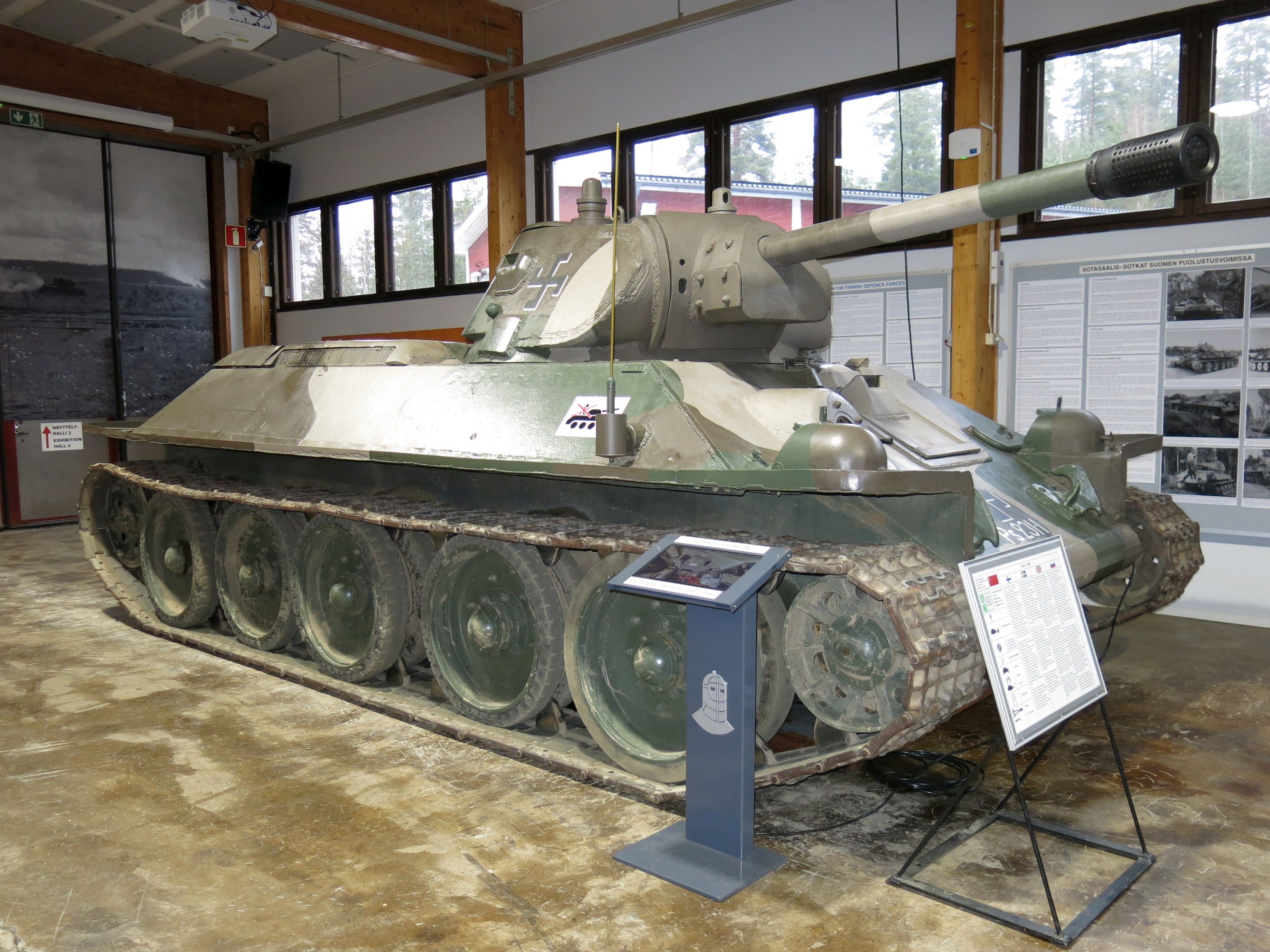
T-34/76 in Parola 2023 © Historix
 

Technically considering T-34/76, the ”Sotka” or ”The short barreled Sotka” as Finns nicknamed it, was a failure. Biggest issue being the powertrain. Medium tank T-34’s gearbox and clutch derived from the much lighter BT-7 tank and did not work well in a heavier weight class. This, combined with the fact that the technical and service support for the Red Army’s armoured forces left a lot to be desired. That leading to the acute lack of spare parts, which resulted in numerous breakdowns and losses of the otherwise usable tank. The design of T-34 was superbly suited for mass production, but in use it was not nearly as good.

Although T-34/76 was a technically unreliable, initially had no radios, it was essentially blind with a very bad vision blocks, periscopes, or prisms and with no cupola, it was well armoured with sloped plates, had an effective cannon and a good mobility (when in usable status). Importantly, the T-34 managed to do its job by slowing the attacking Germans down and later forming the tank masses which broke through the German lines all the way to Berlin. T-34/85, the upgraded and upgunned version, kept on soldiering even through the years of the Cold War receiving two major modernization programmes in 1960 and as late as in 1969. Quite a way to go for this iconic Soviet tank. Still not necessarily the best tank of The Second World War, but a very suitable asset for the Soviets considering their climate, capabilities of their tankers and industrial output and the military doctrine in use.

T-34/76A technical data:
Weight: 27 t            
Armour: 20 – 45 mm, front armour sloped at an angle of 30 degrees (3x stronger than same vertical plate)
Armament: F-34 cannon 76,2 mm. Penetration at 90 angles at 500 m distance 69 mm. 2x7,62 MG
Powerplant: V-2, 12-cylinder diesel, 500 hp
Speed:    55 km/h    
Range: 230 km
Crew: 4 men; commander/gunner, loader, driver and assistant driver/bow gunner


 4    Vickers-Armstrongs 6-ton, Type E  

Early in the 1930s the Finnish army realized its mainstay tank, the French Renault FT-17, had become obsolete and needed to be replaced by a modern tank. Thus in 1931 Finns purchased from England four different tanks for evaluation. One of them was Vickers-Armstrongs 6-ton, type B. At the time it was the most advanced design in the market. Finns were satisfied and presented an order of total 36 type E tanks. New British tanks were the only battleworthy ones when the Winter War started.


Vickers-Armstrongs 6-ton in Parola 2023, © Historix


Soviets had on the other hand begun to produce various sub types of Vickers-Armstrongs tanks in the 1930s under the name of T-26. The overall construction and engine of the Soviet variant was cruder, but it had a long barreled 45 mm cannon, which made it the premier tank of the inter-war years and the winner of tank battles in the Spanish civil war of 1930s. As the Second World War started the T-26 had become the backbone of the Red Army tank corps, and before long the Finnish too. In the Soviet Union the bulk of T-26 tanks were lost by end of 1941. Whereas in Finland Vickers-Armstrongs and the captured Soviet T-26 variants were in service until 1959.  The Soviet Union sold Finland T-54 tanks in 1959.  These became the first post-war era modern battle tanks in Finnish service thus sending the 6-tons and T-26s into the museum.


Same tank, another angle 2023, © Historix


Finns and Soviets were not the only users of the 6-ton tank. Although the British Army rejected the type, it was exported to various countries like Poland, Bolivia, Thailand, China and Bulgaria where it was used in a various conflicts and battles. That's why this tank was quite a remarkable design after all and deserves to be remembered. And by the way the tank in display at Parola is the sole surviving example of the type in the world.

© Historix

Vickers-Armstrongs 6-ton, type E technical data (in Finnish use):
Weight: 8,6 t            
Armour: 6 – 17 mm
Armament: Bofors cannon 37 mm. Penetration at 90 angles at 300 m distance 56 mm. Submachine gun
Powerplant: 4-cylinder, horizontal, air-cooled petrol. 87 hp
Speed: 35 km/h        
Range: 165 km
Crew: 4 men; commander/loader, gunner, driver and bow submachine gunner


3    Comet Mk. I

”Eleven British cruiser tank designs were produced between 1934 and 1945. Some never saw enemy action at all and were retained for training purposes; others saw action but were no match for the German machines. Only two of the designs were really satisfactory – the Meteor-engined Cromwell and the up-gunned Comet variant.” This is how Pat Ware so aptly describes the troubles Brits had finding a way to build a sound cruiser tank. And it wasn’t any better with infantry tanks either.

Enter the Comet Mk. I with a 77 mm gun. Well, the gun was related to 17-pounder (76,2 mm) but had its own classification. What was crucial here was the successful balance of firepower, armour protection and mobility the Comet had. Of course, when talking about British tanks, also reliability had to be considered. The Comet triumphed all these aspects and became a superior Tiger or Panther killer with its new high-velocity armour-piercing discarding sabot (APDS) round.

The Comet came a bit too late to make a difference in the Second World War, but its real contribution was to put the British tank designing back in track after several dismal failures in the past. Comet pioneering the development, the subsequent models became successful and able machines of war: think of the Centurion with a Royal Ordnance L7 cannon or Challenger II. That’s why Comet is number 3 on my list.


Comet on a display run at Parola, © Historix

Comet Mk. I technical data (in Finnish use):
Weight: 33 t            
Armour: thickest 106 mm
Armament: OQF 77 mm HV cannon. Two 7,62 mm MG
Powerplant: Rolls-Royce Meteor V-12-cylinder, liquid-cooled petrol. 600 hp
Speed: 51 km/h        
Range: 198 km
Crew: 5 men; commander, gunner, loader, driver and bow MG gunner


2     PzKfpw IV Ausf. J

There are just a few tanks or other combat vehicles that have done such a career as a German Panzer IV. Wehrmacht’s Panzertruppen used it from the Polish and France campaigns via East Front against the Russians all the way to the sands of the North Africa to fight the British 8th Army.  Panzer IV was produced and in active combat use for the duration of The Second World War, and it comprised 30 % of Panzertruppen’s tank strength. It was widely exported to the German allies. With its numerous variations Panzer IV saw combat to the bitter end of the Third Reich. But the story does not end here.

Panzer IV kept on going after the war. It was used at least by Finnish, Turkish, Spanish and Syrian Armed Forces. On the battlefields of the Middle East Panzer IV, used by Syrians, fight the Israeli M4 Shermans and later Centurions. Finnish Army received in the summer of 1944 only 15 Panzer IVs from the promised batch of 30 tanks. That was worth of just one tank company. A number which was further diminished after the war by a tank warehouse fire at the Army Technical Depot. Surviving Panzer IVs were taken for training service. Today one remaining example of Panzer IV stands on the exhibition slope of the Armour Museum of Parola. And is the number two on my Top 5 Tanks list.


Panzer IV Ausf. J with Finnish markings, © Historix

PzKfpw IV Ausf. J technical data3 (in Finnish use):
Weight: 25 t            
Armour: 20 – 80 mm
Armament: 7,5 mm KwK L/48 cannon. Penetration at 90 angles at 500 m distance:
HE 140, APDS 160, HEAT 93 mm.  Two 7,62 MG2
Powerplant: Maybach HL 120 TRM V-12, 11 867 cc petrol, 300 bhp at 3000 rpm
Speed: 38 km/h        
Range: 270 km
Crew: 5 men; commander, gunner, loader, driver and bow gunner/radio operator
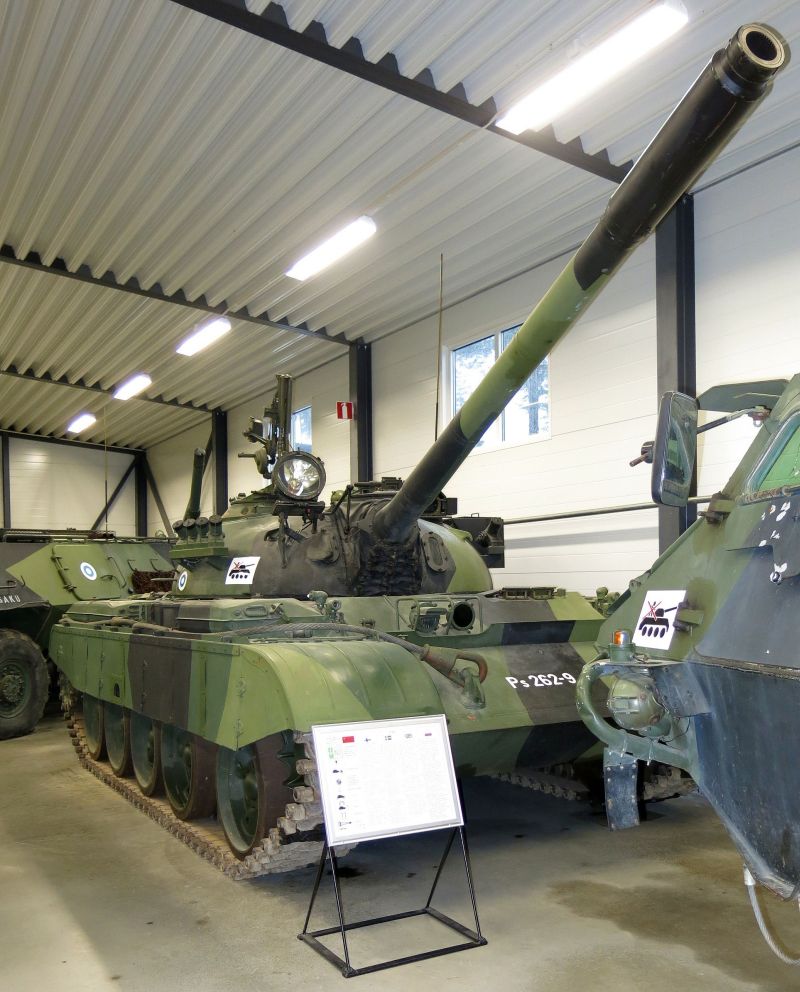


1    T-55

T-55M in 2023, © Historix
It has been said that T-54/55 family of tanks are the most important
ones of the post-World War Two period almost to the end of the Cold War when they finally became obsolete. The sheer number of manufactured tanks (even 100 000 examples) and its extensive combat career on the battlefields of Vietnam, Angola and the Middle East over the past half-century makes this Soviet medium tank special.

Made to be easily used and maintained, in whatever climate, even with low trained personnel, T-55 made itself a true universal tank of its period. It was the last of an all-steel armoured Soviet design, the age of composite armour made T-55 and its failed successor T-62 obsolete.

For me personally T-55 is a very important tank. In Finland there are three major military parades: the Independence Day, Marshal Mannerheim’s birthday and Tank Forces anniversary. As a kid and a youngster, I was always there in a front row watching T-55s passing by with earth trembling under my feet, air filled with black and blue diesel fumes and V-54 engine roaring its wonderful growling V-12 sound. The sound of something historic, the sound, in fact, of the same engine used in T-34 tanks.

T-55 on the training ground, © Historix

T-55 technical data (in Finnish use):
Weight: 36 t            
Armour: 20 – 200 mm
Armament: D-10TG cannon 100 mm. Penetration at 90 angles at 1000 m distance 150 mm. Two 7,62 MG
Powerplant: V-54 diesel, V-12-cylinder water cooled giving 520 hp at 2000 rpm.
Speed: 50 km/h        
Range: 500 km
Crew: 4 men; commander, gunner, loader and driver


Notes


T-34/76A

1. Teräsvalli, Timo. The Parola Armour Museum. p. 36

2. Kavalerchik, Boris. The Tanks of Operation Barbarossa. p. 149

3. Kavalerchik, Boris. The Tanks of Operation Barbarossa. p. 150

4. Green, Michael. Russian Armour in the Second World War. p. 81


Vickers-Armstrongs 6-ton, type E

1. Zaloga, Steven J. T-26 light tank. p. 4-5

2. Kantakoski, Pekka. Panssarimuseo. p. 16, 47


Comet Mk. I

1. Ware, Pat. British Tanks: The Second Word War. p. 31


PzKfpw IV Ausf. J

1. en.wikipedia.org/wiki/Panzer_IV

2. Teräsvalli, Timo. The Parola Armour Museum. p. 50

3. Quarrie, Bruce. Encyclopaedia of the German Army in the 20th Century. p. 199-200


T-55M

1. Zaloga, Steven J. T-54 and T-55 Main Battle Tanks 1944-2004. p. 3

2. Tucker-Jones, Anthony. T-54/55 The Soviet Army’s Cold War Main Battle Tank. p. 16-17

3. Teräsvalli, Timo. The Parola Armour Museum. p. 63


lauantai 25. heinäkuuta 2015

Red Army Tank Commander on the Tiger Hunt

Vasiliy Krysov, the Panzer Destroyer, was an extremely lucky Red Army soldier to survive the war to tell his story in this book. He started the fighting at Stalingrad, soldiered on through the massive tank battle of Kursk, crossed the mighty river of Dnepr to liberate Kiev and finally ended up his war capturing Königsberg, present time city of Kaliningrad in the former East Prussia. His first assignment was to be the leader of a KV-1S tank. Not before long he changed over to the assault guns. There he was to become a platoon and soon a battery leader having as a tool of war SU-122 self-propelled howitzer and later SU-85 tank destroyer. Krysov ended up the fighting commanding the best battle tank Russians could offer: the T-34/85. There are 15 chapters in his memoirs leading the reader from the initial tank training boot camp to the fighting and post war officer training school in Leningrad. The reader is pleased to use fine tactical maps, Index and helpful Notes to amplify the experience.  Although there are just few pictures available in the book, they give an interesting and rarely in the West seen insight to the world of Soviet tankers.

Panzer Destroyer opens up the game with no modesty. On the 29 the of July 1942 there was a battle of Lipologovo taking place in a village near Kalats na Don. Krysov claims the Soviets captured there thirty Panzer IV -tanks and other armoured vehicles intact while Germans, horrified by Katjusha rocket launchers, fled the battlefield.

It gets even better as he describes the battle of Jastrebenka village near Kiev in November - December 1943: he claims he destroyed as many as eight Tiger I -tanks with his own SU-85 self-propelled gun. The opposing troops were no less than the elements of 1st Waffen-SS Panzer Division Leibstandarte Adolf Hitler. It becomes clear what is the main issue of this book - it is exaggeration, we may even say hyperbole. In the book Germans are presented as an incompetent and weak combatant. One may wonder why and by whom there were any casualties on the Soviet side at all. Krysov says he once saw an entire German infantry company equipped with submachine guns. That's not very likely to be true. It was customary for Germans to have Kar98k rifle as a standard weapon for infantry soldier, submachine guns were reserved for squad leaders or other officers. What really may amaze the reader is the number of Tiger I –tanks Krysov claims to have seen or destroyed on the battlefield. Where did all these Tigers come? Since Tigers were a scare resource deployed only with small numbers to the elite Waffen-SS troops and the Gross Deutschland elite Wehrmacht division.

On July 1944 Krysov, with his unit, crossed the river Bug into a "neighbouring country" as he labels the territory of the East-Poland. Thus he actually approves and confirms the notorious Molotov-Ribbentrop -pact and the partition of Poland between the Nazi-Germany and Soviet Union.  Battles fought alongside the crossing gave Krysov more fame, at least he thinks so. He claims his battery of five SU-85 self-propelled guns destroyed uncounted numbers of Tigers of the 5th Waffen-SS Panzer division Wiking by penetrating Tigers through the frontal armour with their 85 mm D-5T cannons. Near the Polish village of Stulno Krysov and another SU-85 backed up with some submachine gunners destroyed a whole German motorized infantry regiment.

How to call the enemy, that's the question for Krysov! He fought from Stalingrad to Königsberg, it was a long and hard way to go. Through the time - until the very end - he confronted, according to his statement, Germans, Fritzes, Nazis and Fascists. He does not mention having any battles against Italians. So we can count out Fascist forces, especially when Italy withdrew from the Eastern front after the disaster of Don late 1942. Why does Krysov claim to have a fight against fascists when there was no such opponent around? Fascists were Italians who wanted to build corporate state according to their view of socialism. Fascists were not the Nazi-German Wehrmacht forces you might think. Why all this controversy? The answer is quite simple: Stalin wanted to fade out any logical links between the two rivalling forms of socialism, which were the Soviet International communism and German National socialism. It was imperative for the Soviets to obscure the reality of the struggle of two similar ideologies by labelling Germans as Fascist or Fritzis (the latter was a non-political, more like a nation based definition). Unfortunately comrade Stalin was more than successful in his mission to misinform, since even the modern day media in the western world can not make a clear distinction between the two. So even today we have to read news where reporters do not have any clue of realism or they are constantly abusing political terms. To make it simple: Nazis, Fascist and Communists were all the same leftist lot! It was only a matter of details which made the difference between them, like the question: are you for nationalism or internationalism?

The strength of the book can be found in its occasionally presented honesty. For instance, Krysov openly describes one of the dubious practices of the Red Army, that is to say the PPzh front wives. The name is a reference and Russian language wordplay to the famous PPSh -machine gun. Again, in this book it is easy to see how the Red Army officers or Stavka did not have much sympathy at all for their subordinates.  On one particular occasion, near Königsberg, Krysov had to roast some loaves of bread in a frying pan using engine oil as a substitute for frying fat.

Krysov claims he destroyed 19 tanks and set on fire 12 ones. Of those, he says, eight were Tigers and one a Panther. He was never decorated nor mentioned by the Red Army.  It seems his story contains a strong element of personal bias. For instance he can’t understand why German civilians fled to the West as the advancing Red Army was approaching their homes. Krysov concludes the German civilians were merely betrayed by the Fascist propaganda to flee. After all this being said the memoirs of Vasiliy Krysov give an interesting and vividly told insight to the everyday life and fighting of the Red Army tankers.

Kryzov, Vasiliy: Panzer Destroyer - Memoirs of a Red Army Tank Commander, English translation by Vladimir Kroupnik, Pen & Sword, Barnsley 2010, 205 pages.


About the armoured fighting vehicles used by Vasiliy Krysov


Soviets had in the early 1930s started their tank mass production by either buying licences (T-26) or simply copying foreign models (T-28, T-35, BT-tanks). The Spanish civil war, Hahin-Gol skirmishes against the Japanese tanks and the Russo-Finnish Winter war had clearly shown the need for a new generation of tanks.

The rise of Nazi-Germany made the modernization programme a priority for the Soviet Union. Thus a new range of airplanes and AFVs were introduced at the opening stages of the Second World War. The Soviet tank core received two battle tanks, KV-1 and T-34/76, which were to play key roles in the battles ahead. The latter one would prove to have a huge and profound impact on the tank design and the history of armoured warfare.


KV-1S

KV-1S
Wikimedia Commons

The first of the new tanks to reach the front line service was KV-1 also known as Klimenti Voroshilov. The name of the KV-1 was carefully chosen. The father-in-law of the chief designer of the tank, S. Kotin, was no one else than the Marshall of the Soviet Union Klimenti Voroshilov. He was then the People’s Commissar for Defence of the Soviet Union and close aide to Stalin himself.

S. Kotin saw it clearly how the single turreted prototype of KV-1 was far superior to the two or more turreted vehicles. To verify his testing results KV-1 was sent in December 1939 to the Russo-Finnish War. While in the Karelian Isthmus the new tank was designated to infantry close support role. The positive demonstration of ruggedness and combat survivability led to the decision to start mass production of KV-1 in December 1939.  The KV-1 shared some components with T-34. Both tanks had the same engines and later on same main gun, the 76,2 mm F-34 (for the KV-1 the gun was named ZiS-5). As the KV-1 was more than 10 tonnes heavier than T-34, it was natural that speed, off road manoeuvrability and ground pressure values of the KV-1 were inferior. The mechanical reliability of the tank was dismal; especially this was true with the powertrain of the tank. However, the KV-1 was heavily armed and armoured. It proved to be a formidable opponent on the battlefield.

Germans had no tank to put up against the KV-1 in the summer of 1941.  The only effective way to kill a KV-1 was to either call Junkers Ju-87 Stukas in or try shoot it with 8,8 cm FlaK 18 Anti-Aircraft cannon. On the other side KV-1 had poor cross-country manoeuvrability, mechanical defects and almost non-existing optics to observe the battlefield. In fact if the hatches were closed, the KV-1 was virtually blind. To make things worse the crew layout was poorly-designed: the vehicle commander was at the same time employed as the gun-loader and he did not have his own hatch or cupola to monitor the battlefield. There was an obvious need for upgrade.

To fix the well known defects of the KV-1 a new version came out of production lines in August 1942. The new design was called KV-1S, suffix S stood for skorostnoi – speedy.  KV-1S was much lighter due to thinned armour: protection had been traded for mobility. Improved powertrain and overhead armoured cupola for the tank commander to observe the battlefield were among the upgrades. The turret had been totally redesigned.  While it was smaller it housed a dedicated tank commander as the fifth crew member. This is how the Soviets learned to follow the German crew layout which had proved to be superior. Despite the upgrades KV-1S was manufactured only for the period of one year. After 1370 units were completed the arrival of new heavy German Tiger and especially Panther tanks made KV-1S obsolete. To meet the new opponents the Soviets composed an interim model of KV-85 while waiting for their own ‘heavies’ like IS-2.

The KV-1S tanks rolled out of production lines just in time to take part of the battle of Stalingrad. In fact, Krysov had his tank from the Stalingrad Tractor Factory overhaul line to have his baptism of fire.


KV-1S technical data

Weight: 42,5 ton
Crew: 5 (commander, gunner, loader, driver, co-driver)
Engine: V-2K-s, four-stroke V-12 diesel, liquid cooling
Max horsepower: 600 hp / 2000 rpm
Power to weight ratio: 12,9 hp / ton
Top speed: 42 km/h
Range: 250 km
Ground pressure: 0,72 kp/cm2
Steering system: clutch-brake
Suspension system: Torsion bar
Gearbox: forward / reverse 5 / 1
Armour thickness: 82-30 mm
Communication: radio and intercom
Main gun: 76,2 mm ZiS-5 / 41,5 calibre

Penetrating performance of the standard armour-piercing round against steel armour at 90 degree angle from 500 metres: 92 mm


T-34/85

T-34/85
 Foto © Historix

The real flagship and legacy maker of the Soviet tank industry saw its birth in the summer of 1939 as the upgraded prototype of A-34 emerged. This version would later be known as the T-34/76 medium tank. Actually the hole range of Soviet medium and later main battle tanks (MBT) were related to T-34/76 basic design and engine. For instance T-72 MBT used the same basic engine layout, only to be upgraded and improved by many ways and fitted with a turbocharger. The first Russian MBT with no connection to the T-34/76 is T-14 Armata.

It is extraordinary for a tank to get such a fame that the T-34 range achieved. But this time Russians had developed something that the world had never seen before: a successful combination of highly advanced technical solutions. The tank was well ahead of its time and later a model for other foreign combat vehicles to come. Perhaps the best known example of this is the mighty German PzKpfw V Panther. The armour of T-34/76 was a result of a huge innovation to use highly-sloped steel plates at the angle of 30 degrees. While the frontal armour was only 45 mm thick, it offered up to three times better protection against an AP-shell than normal 45 mm steel plate at 90 degrees.

Another big innovation was the use of a brand new V-2 diesel engine. This would increase the operational range. Which, in turn, would be exploited by the use of Christie type suspension with wide tracks. The combination enabled T-34/76 to run through swamps or high snow like no other tank. The new T-34/76 tank was simple by design and very robust. It had as its main weapon the 76,2 mm F-34 cannon, which in fact was a loan from KV-1 design. The long barrelled cannon proved to be superior against any opposing tank until late 1942 as the Tiger I came to front line service.

Naturally there were downsides offsetting the battlefield superiority of the T-34/76: the tank was hard to command. Optics were of poor quality and there weren't enough of them. The commander of the tank had to work as a gunner at the same time. Interestingly enough, inside the turret of KV-1 it was the loader who had to be also the commander of the tank. Only a small number of T-34/76s were equipped with radios or intercom. This, of course, made it impossible to command a tank unit during the battle. In this respect the most advanced tank of its time was no better than its predecessors from the early 1930s, namely the T-26 and BT-7.

During the summer of 1941 it was astonishing that Germans had no idea that they would soon meet new Russian tank designs like T-34/76 or KV-1. What a nasty surprise T-34/76 must have been for German tankers who in disbelief saw how their PzKpfw III and IV tanks could practically do  nothing against the enemy tank. This obviously led Germans hurriedly to build something to match the new threat. The interim solution was the introduction of 7,5 cm Pak 40 anti-tank cannon and its tank cannon version of 7,5 cm KwK 40 L/43. New German cannons reduced the battle worthiness of T-34/76 and balanced the situation for Germans. It was, however, the introduction of German heavy Tiger I and medium Panther V tanks that made T-34/76 obsolete.

It was the turn of the Red Army to find a countermeasure against the new menace. The improved T-34/85 design was not yet ready for mass production. As a stopgap solution Russians introduced a new tank hunter SU-85.  It combined a battle worthy chassis and hull of T-34/76 but had bigger and more potent 85 mm anti-aircraft cannon in a fixed superstructure. This cannon was to be the new main weapon of the T-34/85.

As the new T-34/85 got to the front lines in spring of 1944, it was a design with many improvements over the older version. The most important one, besides the stronger cannon, was the introduction of a dedicated tank commander operating with better prisms in his own cupola. Now all T-34/85s were fitted with radios and intercoms. The monstrous four speed gearbox had been changed to new five speed one for the joy of every T-34/85 driver. The new medium tank didn't altogether solve the very basic problem Russians still had: they did not possess a cannon with adequate penetrating power against German late-war tanks like Tigers and Panthers. ZiS-S-53 cannon, the main weapon of T-34/85, and its principal AP-shell BR-365 could destroy a Tiger only when shot from the very favourable position and worse to come: BR-365 couldn't penetrate the frontal armour of a Panther at all.

Despite its obvious limitations T-34/85 was mass produced well into the late 1950s. In fact Soviets released two upgrading programs for the tank in the 1960s. Most post war T-34/85 tanks were exported into the Third World countries and Middle East. As the Soviets attempted to improve their tank inventory, the hull of the T-34/85 was redesigned which gave birth to T-44. This proved to be an unsatisfactory model since it still carried the old 85 mm ZiS-S-53 cannon and was mechanically unreliable. When the turret was redesigned and enlarged to house a 100 mm D-10T naval cannon, a new highly successful family of tanks was born: T-54 and T-55. The production of T-54 started in the late 1940s and its further improved successor T-55 turned out to be a real export hit and universal tank soldiering on all around the world. It is estimated that some 80 - 100 000 pieces were produced. What a legacy for the T-34/76 tank indeed!

T-34/85 technical data

Weight: 32 ton
Crew: 5
Engine: V-2, four-stroke V-12 diesel, liquid cooling
Max horsepower: 500 hp / 1900 rpm
Power to weight ratio: 15,8 hp / ton
Top speed: 55 km/h
Range: 300 km
Ground pressure: 0,85 kp/cm2
Steering system: clutch-brake
Suspension system: Christie
Gearbox: early forward / reverse 4 / 1,  late forward / reverse 5 / 1
Armour thickness: 70-22 mm
Communication: radio and intercom
Main gun: 85 mm ZiS-S-53 / 51,5 calibre

Penetrating performance of the standard armour-piercing round against steel armour at 90 degree angle from 500 metres: 111 mm


SU-122

SU-122 in Kubinka
Wikimedia commons

The Soviet heavy industry managed to design and produce in the Word War II a wide range of armoured fighting vehicles for special roles.  One of the AFVs used by Krysov, the SU-122 medium self-propelled howitzer, was a sound example of this. The SU-122 had a five-man crew in an armoured casemate with limited traverse on a chassis of the T-34/76 tank. The production started by the fall of 1942 and it came to frontline service by the beginning of 1943.

The armament of SU-122, 122 mm Howitzer M-30 barrel length just 22,7 calibre, gave a hint of its designated role on the battlefield. It was to support tank units on the offensive with direct and indirect fire. One additional mission, which, however, proved to be quite unsuccessful, was to fight against enemy tanks. Krysov boasts to have killed Tigers in the battle of Kursk with his SU-122.  There was indeed an anti-tank round available for M-30 howitzer, but it had no real armour penetrating power. So it seems more likely that if there were Tigers destroyed by the fire of SU-122s then the most probable cause would have been the kinetic energy of the HE, or High Explosive, round. It could have severely damaged the turret of the Tiger or even torn it away from the hull. Anyway, the Soviets quickly replaced SU-122s with more potent models based on the chassis of the KV-1.


SU-85

SU-85
Wikimedia Commons

As the Soviet tank core was obligated to wait for the new medium T-34/85 tank until the spring of 1944, a stopgap solutions were pressed into service. One of these was the SU-85. It was fielded to operate in a strictly dedicated anti-tank role. The given role was more than ambitious: the SU-85 was to fight up against Tigers and Panthers to protect the less well-armed T-34/76 tanks still widely in use.

SU-85 tank destroyer, or Istrebitelj as the Soviets called it, had its baptism of fire by the September of 1943 when The Red Army was crossing the river Dnepr. The annoying battle experience was that even the 85 mm cannon didn't have adequate penetrating power to fight on equal basis against new German tanks.

By the summer of 1944 the T-34/85 had become widely available and the production of four man SU-85 was cancelled. To improve the anti-tank hitting performance, the rugged chassis of SU-85 was fitted with an 100 mm D-10S naval gun. The subsequent tank killer was designated the SU-100. Due to production problems of the 100 mm guns, some early SU-100s had to arm with old 85 mm guns. These variants are known as the SU-85M.


В Финляндий криминальное правидельство делают с иммигрантом геноцит для все простой финны.
Господи, помилуй нас!

tiistai 22. huhtikuuta 2014

Uskollinen valalle - Getreu dem Fahneneid, The National People's Army of GDR


Ostalgiaa on tarjolla riittämiin, kun perehtyy vuonna 1981 painettuun Getreu dem Fahneneidiin.  Teos on julkaistu Itä-Saksan kansallisen kansanarmeijan (NVA) kunniaksi sen täyttäessä 25 vuotta. Takakannesta löytyy painettuna kirjan myyntihinta 30,- M. Tämä oli ns. itäblokin maissa yleinen käytäntö, hinnat näet pysyivät pitkälti muuttumattomina. Kirjan nimi voitaisiin kääntää suunnilleen muotoon "Uskollinen valalle". Miksi sitten tämänlainen teos on ylipäätään tehty? Kirja vastaa tähän itse heti sen alkulehdillä: "Bilddokumentation über die Nationale Volksarmee der Deutschen Demokratischen Republik". Kyseessä on siis valokuvadokumentaatio ja kirjallinen tietopaketti NVA:sta. Jotta kaikki menisi protokollan mukaan, Erich Honecker on kirjoittanut alkuun saatesanat. Niissä hän mahdollisesti kiteyttää DDR:n idean "Vom Soldaten bis zum General sind die Klasseninteressen gleich." Taisi kuitenkin käydä niin, että tavoitteeseen ei päästy, ei edes lähelle.  Sotilaan ja kenraalin sosioekonomiset luokkaintressit ovat vaikeasti yhteen sovitettavia - myös sosialistisessa yhteiskunnassa. Vaikuttaa siltä, että tämän kirjayksilön ovat "Dübenerin toverit" antaneet lahjaksi johtajalleen tai kouluttajalleen. Käsin kirjoitettu omistuskirjoitus on kerrassaan taidokasta jälkeä.

Omistuskirjoitus
Koska nyt arvioitava kirja on tehty Itä-Saksassa, niin sen rakenteessa näkyy hyvin saksalainen järjestelmällisyys. Preussilainen arvostaa järjestystä, jopa sosialismin oloissa. Kirja on jaettu kolmeen osioon, jotka luovat loogisen ja kronologisen, toimivan kokonaisuuden. Ensin käsitellään NVA:n olemassaolon tarvetta, tehtävää ja asemaa "Työläisten ja talonpoikien valtiossa". Armeijan ja puolueen (SED) sidos toisiinsa tuodaan peittelemättä esiin. Laajempia taustoja valotetaan mainiolla katsauksella edistyksellisen liikkeen merkkipaaluihin Saksan historiassa. Vanhimpiin kuuluvat mm. talonpoikaiskapina 1525, sota Napoleonia vastaan 1813, Euroopan hullu vuosi 1848 ja Pariisin kommuuni 1871. Vuoden 1848 levottomuudet kuvataan sosialistisessa hengessä seuraavasti: "Bürgerlich-demokratische Revolution in Deutschland"  eli Kansalais-demokraattiseksi vallankumoukseksi Saksassa. Uudempaa edistyksellistä toimintaa edustavat vuoden 1918 marraskuun vallankumous, Ruhrin Puna-armeijan taistelu 1920, Internationalistien osallistuminen Espanjan sisällissotaan 1936 ja saksalaisten kommunistien taistelu Neuvostoliiton Puna-armeijan puolella toisessa maailmansodassa. 

Itä-Saksan kansallisen kansanarmeijan syntyvaiheet ovat erittäin mielenkiintoista seurattavaa. Kaikki alkoi 1950 "nuoren tasavallan turvaksi perustetusta" kansanpoliisista "Volkspolizei", josta osa kehittyi vuoteen 1952 mennessä raskaammin aseistetuksi joukoksi. Samalla sen nimeksi tuli "Kasernierten Volkspolizei". Toukokuussa 1955 Länsi-Saksa liittyi NATOn jäseneksi ja alkoi varustaa uutta armeijaa, Bundeswehriä. Neuvostoliiton vastineena perustettiin Varsovan liitto ja vuonna 1956 sai ensimmäinen NVA:n yksikkö (1. Mekainisoitu rykmentti) joukko-osastolippunsa.  Berliinin muurin rakentamista elokuussa 1961 valvoi ja varmisti jo useita NVA:n yhtymiä. Alusta lähtien korostettiin kansan ja sen armeijan läheistä suhdetta heidän rakentaessaan yhdessä sosialismia.

Kansan parissa s.46
Huomiotani kiinnitti armeijan nuorisojärjestö GST (Die Gesellschaft für Sport und Technik), samoin   puolueen pioneerijärjestö ja FDJ (Freien Deutschen Jugend). Kaikesta päätellen näiden järjestöjen toiminnasta löytyy kiusallisia yhtymäkohtia erääseen toiseen Jugendiin, joskin 1930-40 -luvuilla vaikuttaneeseen, ja sittemmin kiellettyyn saksalaiseen puolisotilaalliseen nuorisojärjestöön. Länsi-Saksassa varottiin  sallimasta mitään toimintaa, jossa  olisi kaikuja menneestä natsiajasta. Itäinen Saksa ilmeisesti ajatteli hyvän tarkoituksen pyhittävän käytettävät keinot. Saksassa muuten kerrotaan anekdoottia siitä, kuinka Kolmannen valtakunnan loputtua toukokuussa 1945 Neuvostoliiton miehitysvyöhykkeellä "yhdessä yössä ruskeat paidat vaihtuivat punaisiin". Sain tästä selkeän käytännön esimerkin vieraillessani Sachsenhausenin keskitysleirissä 2008. Natsien aikaan leiri oli tarkoitettu poliittisille erityisvangeille ja siinä oli oikeastaan vankila keskitysleirin sisällä: kivisessä "Zellenbau"  vankilarakennuksessa keskellä leiriä pidettiin kaikkein tärkeimpiä vankeja.

Gestapon erityisvankila Zellenbau 2008. Foto © Historix

Kun leiri jäi Neuvostoliiton miehitysvyöhykkeelle, siihen rakennettiin vielä lisäosa ja vaihdettiin vartijat. Näin Sachsenhausen jatkoi toimintaansa uuden punaisen lipun alla entistä ehompana ja laajempana. Sen seurauksena leirin ulkopuolella on kommunismin aikana leirissä tapettujen joukkohautausmaa ja uhrien muistomerkki. Niin, palataan kirjan pariin. Reserviläistoimintaakaan ei ole unohdettu: kertausharjoituksia ja ampumakoulutusta riitti reserviläisille vielä varsinaisen armeija-ajan päätyttyäkin. Alla kuvassa NVA:n paraati ajaa kohti Unter den Lindeniä ja on ohittamassa hiljattain valmistunutta Tasavallan palatsia (Palast der Republik), joka rakennettiin vanhan Hohenzollerinin palatsin, eli Berliinin  kaupunginlinnan paikalle, parlamentin "Volkskammerin" kokoontumispaikaksi. Kansan keskuudessa rakennus sai kuitenkin humoristisen nimen "Erichin lamppukauppa" rakennuksessa olleiden lukuisten erilaisten lamppujen mukaan.


Erichin lamppukauppa s. 67

Kirjan toinen osio esittelee NVA:n eri aselajihaarat. Maavoimat on tärkein osa armeijaa ja sen pääiskuvoimaksi nostetaan panssarijoukot. Kirjassa tunnutaan arvostavan muutenkin panssarijoukkoja, sillä ne saavat koko kirjan huomiosta suhteellisesti suurimman osan.
NVA:n T-55 rynnäköi s.111
DDR satsasi myös tykistöön, jota esitellään monipuolisesti. Mukana ovat mm. raketinheittimet ja tykistöohjukset. Erichin lamppukauppakuvassa paraatin ohiajavana kalustona on Neuvostoliittolaisia 9K52 Luna-M,  NATO:n kutsumanimeltä Frog-7 lyhyenmatkan tykistöohjuksia. Ilmavoimat ovat mukana suomalaisillekin tutuilla MiG-21F / bis / U -malleilla ja toisaalta vieraammalla MiG-23 kalustolla. Volksmarine, eli Kansanlaivasto on, kuten ilmavoimatkin edellä lyhyemmin esiteltynä.  Volksmarinen tehtävä on kuitenkin määritelty selkeästi: Kansanlaivasto toimii yhteistyössä muiden aselajien, Baltian punalippuisen laivaston (Kaliningradin neuvostolaivaston) ja Puolan sotalaivaston kanssa turvaamassa DDR:n merirajoja. Esimerkit eri sotilasoppilaitosten nimistä ovat maininnan arvoisia: mm. maavoimien upseerikoulu "Ernst Thälmann", sotilaspoliittinen korkeakoulu "Wilhelm Pieck" ja kansanlaivaston "Karl Liebknecht".


Kirjan ansioiksi on luettava se, että siinä ei unohdeta yleensä syrjään jääviä avustavia aselajeja. Huolto erikoisyksiköineen on mukana ja voidaan huomata DDR:ssä käytetyn samanlaista jaottelua sotilas- ja siviiliasentajien välillä kuin Suomen puolustusvoimissakin. Urheilulla, kulttuurilla ja virkistyksellä oli NVA:ssa tärkeä ja tunnustettu asema. Mikäpä oli upseerien viettäessä lomaa Itämeren rantakylpylöissä. Kulttuurista kun puhutaan, niin lienee väistämätöntä nähdä jossain vaiheessa Puna-armeijan kuoro ja soittokunta esiintymässä. Tällä kertaa kirjassa on kuva yhteiskonsertista, jossa lavalla on mukana myös Kansallisen kansanarmeijan laulajia ja musikantteja. Historiaa tuntevalle moinen näky antaa aihetta mietiskelyyn, varsinkin kun lavan suurena taustakoristeena seisoo Puna-armeijan sotilas lapsi sylissään.
Treptowin puiston muistomerkki 2008.
Foto © Historix
Taustalla viitataan Treptowin puistossa, entisessä Itä-Berliinissä olevaan muistomerkkiin ja sen sotilaspatsaaseen lapsi sylissään. Patsas pystytettiin "vapauttajasotilaiden" muistolle, mutta hyvin pian Berliinin naiset antoivat sille uuden, vähemmän mairittelevan nimen "Tuntematon raiskaaja".

Sosialismin saavutusten ja rauhan puolustaminen oli tietysti tärkeätä ja kirjan kolmas, viimeinen osio paneutuu aiheeseen tarmolla. Sivulla 178 kerrotaan olennaiset lähtökohdat: "Der Schultz des Sozialismus und des Friedens liegt  in starken und zuverlässigen Händen". Näin viitataan Varsovan liiton veljesmaihin ja etenkin Neuvostoliiton osuuteen vahvan ja luotettavan puolustuksen takaajana. Tässä yhteydessä kirjassa seuraavat lyhyet veljesmaiden armeijoiden esittelyt. Mukana ovat Bulgaria, Puola, Romania, Unkari ja Tsekkoslovakia, mutta esittelyn aloittaa Neuvostoliiton armeija, kuinkas muuten! 

Aseveljeys on kirjassa arvossaan ja niinpä yhteisistä harjoituksista on paljon materiaalia. Itä-Saksan huippupoliitikot vierailivat Erich Honeckerin johdolla valtionsa alueella olevissa Neuvostoliiton sotilastukikohdissa osoittamassa ystävyyttään ja aseveljeyttään mm. lahjoittamalla neuvostojoukoille punalippuja. Suomessa samaan aikaan poliitikoilla oli tapana vierailla Tehtaankadulla. Vuosi ennen kirjan painoon menoa Varsovan liitto järjesti suuret Waffenbrüder 1980 -sotaharjoitukset. Kirjassa mainittiin jo aikaisemmin käsite "Sozialistisches Kampfkollektiv" eli sosialistinen taistelukollektiivi. Itselleni käsitteen sisältö jäi hieman epäselväksi, mutta olisiko Waffenbrüder -harjoituksen yhteydessä esitetty sillanrakennus eräs sen käytännön sovellus?  Kun NVA:n ja neuvostoarmeijan pioneerien yhteinen silta oli saatu rakennetuksi, niin sitä juhlistettiin ohimarssilla liput liehuen  ponttonisillan yli.

Sillanrakennusparaati s. 215

Toinen itselleni epäselväksi jäänyt käsitepari oli toteamuksessa, joka mukaan NVA:n sotilaat ovat sitoutuneet sellaiseen kuin "sozialistischer Patriotismus und Proletarischer Internationalismus". Ilmeisesti sosialismi oli määrä ymmärtää ja tulkita käytäntöön hieman eri sisällöillä ja merkityksillä sosialististen ja kapitalististen maiden yhteiskunnissa - aina tarpeen mukaan, vai kuinka? Mitä oli "sosialistinen isänmaallisuus" Itä-Saksassa? Ehkä sitä, mitä kirja kuvaa aikaisemmin  puolisotilaallisena nuorisotoimintana, kansanarmeijan palveluksen kunnioittamisena ja reserviläistoimintana täysin militarisoidussa valtiossa - eli kertausharjoituksina, ammuntoina vapaa-ajalla ja lopulta perin konservatiivisena isänmaallisuutena? Läntisissä demokratioissa sosialistinen isänmaallisuus tarkoitti sen toteuttajille edellisen vastakohtaa. Tällöin se piti sisällään "edistyksellistä" ja kumouksellista, yhteiskunnan vastaista toimintaa, jota harjoitettiin Frankfurtin koulukunnan oppien mukaan. Äärimmilleen vietynä se näyttäytyi maolaisina, stalinistisina ja taistolaisina liikkeinä tai jopa vasemmistolaisina  DDR:n  salaisen poliisin Stasin tukemina terroristijärjestöinä kuten RAF Länsi-Saksassa tai Punaiset prikaatit Italiassa. Sosialistiset aseet olivat "rauhaa puolustamassa", kun lännessä ne olivat imperialistista asevarustelua. Vaikuttaa siltä, että sosialistisen isänmaallisuuden läntinen, eurokommunistinen perinne elää edelleen nykyisen Euroopan Unionin politiikassa ja sen eri jäsenmaiden kansallisissa käytännöissä. Vai miten on ymmärrettävä sosialistisen rauhanliikkeen osaltaan aikaansaama tilanne, jossa läntisen Euroopan maissa oma kansallinen puolustus on ajettu alas ja kaikki kansallismielisyyden ilmaukset ovat paheksuttavia?

Proletaarinen kansainvälisyys aukenee käsitteenä helpommin: sen hengessä Itä-Saksaan tuli huomattavia määriä ystävällismielisten sosialististen veljesmaiden kansalaisia - lähinnä kehitysmaista - koulutettaviksi  tai töihin. Olen lukenut ja kuullut itäisessä Saksassa vieraillessani arvioita, joissa kerrotaan kyseisen kansainvälisyysohjelman synnyttäneen, hämmästyttävää kylläkin, itäiseen Berliiniin sen läntistä osaa vahvemman uusnatsi- ja skiniliikkeen. EU näyttää nykyisellään tavoittelevan joiltain osin samoja poliittisia päämääriä joihin jo DDR pyrki. Historian opetus on kuitenkin selkeä: kauniit ja ylevät yhteiskunnalliset utopiat kestävät reaalielämän koetuksen huonosti ja niillä on taipumus romahtaa ennemmin tai myöhemmin. DDR:n tapauksessa siihen meni vain vähän yli 40 vuotta - Neuvostoliitto puolestaan sinnitteli 74 vuotta ennen väistämätöntä kohtaamistaan todellisuuden kanssa.  Kirjassa korkealle arvostetun aseveljeyden merkitys jäi DDR:n selviytymiselle lopulta täysin merkityksettömäksi.  Waffenbrüder 1980 -sotaharjoituksen tunnuslause kuului silti näinkin mahtipontisesti: "Vereint für Frieden und Sozialismus - dem Fiend keine Chance!" Mutta entäpä jos DDR:n järjestelmän pahin vihollinen olikin DDR itse?

On ilmeistä, että tämän kirjan perustarkoitus oli toimia osana DDR:n sisäistä propagandaa. Siinä teos ansiokkaasti onnistuukin. Toisaalta, kun siitä karsii propagandakerroksia, niin tarjolla on mielenkiintoinen näkökulma "Harppi-Saksan" maailmaan. Runsaasti kuvitettuna se antaa rivienvälistä informaatiota DDR:n elintasosta ja arkipäivästä. Ellei sosialismi olisi aatteena aiheuttanut nyt jo laajalti tunnettuja rikoksia ihmiskuntaa vastaan, niin kirja olisi yksi hullunkurinen ja harmiton esitys keinotekoisesta idealistien leikkivaltiosta, joka kaatui omaan mahdottomuuteensa. Hullunkurinen, niin kuin se Nukkumatin (Unser Sandmännchen) maailma YLE:n pikkukakkosessa 1970-luvulla, jossa hän heitti unihiekkaa milloin milläkin sosialismin teknisellä saavutuksella liikkuen - muistatteko?


Supposedly you know what the phrase "Ostalgia" means? In this book there are plenty of it to see and feel. The book commemorates the 25th anniversary of the NVA, the National Peoples Army of the East Germany (the former DDR). As it was a custom in the former eastern bloc countries, the price of the book  30,- M is printed on the back cover. The name of the book translates roughly in English as "Loyal to the Military Oath". The name also notifies the meaning of the work, "Bilddokumentation über die Nationale Volksarmee der Deutschen Demokratischen Republik". So what we have here is a pictorial documentation dealing with the NVA and it's branches and different services. In order to start it properly, the Head of State Erich Honecker addresses the book as follows: "Vom Soldaten bis zum General sind die Klasseninteressen gleich." It may well be that in this sentence comrade Honecker has managed to crystallize what was theoretically the main idea of the DDR as a state and society.  In DDR the class interests were to be the same for an individual soldier as well as  a general of the army. As it turned out to be, the DDR never reached it's highly ambitious goal. The inscription makes this copy unique. It seems that the copy is meant to be a present for a drill instructor or leader of a group of soldiers who regard themselves "The Comrades of Dübener". The  quality of the handwriting used in the inscription is just outstanding.

Getreu dem Fahneneid is a German book and it is systematically build to meet Prussian values of order and logical arrangement.  The book is divided into three main sections, which, when brought together, form a logical and chronological order to follow. The first section of the book has a mission to justify the need and existence of the NVA in the "State of workers and peasants" i.e. German Democratic Republic. In order to meet the previous demand the tight connection between the army and the socialist party (SED) is brought clearly visible.  History is a useful tool when one tries to find vindication for present ventures.  This is also what happens in the book. The progressive movement of DDR has its roots in the German history, the book argues. As a proof of it reader will be guided through the peasant uprising 1525, war against Napoleon's France 1813, the year of European revolutions 1848 and Paris Commune 1871. Interestingly enough, the European uprising in 1848 has a unique socialist significance in its DDR given name "Bürgerlich-demokratische Revolution in Deutschland". This roughly translates to "civic-democratic revolution in Germany".  If the historical proof presented so far is ancient, there are also modern examples in the book to see. November revolution 1918 in Germany is accompanied by the Red Army of the Ruhr in 1920. These two refer to the post WW I attempts by the German socialist and communist movement to create a socialist state after the example of Soviet Russia. The Spanish civil war in the 1930's gathered progressive people also from the Germany to defend Spanish republic against Nationalist army. As a pinnacle and well valued part of progressive struggle is the role of German communists fighting alongside the Soviet Red Army against the so called Fascist Germany and its Werhmacht.

One of the most interesting part of the book is how it all started for the NVA. It was back in 1950 when a young republic needed security and the "Volkspolizei",  the Peoples police, was founded. By the year 1952 a segment of it had developed into a heavily armed force and it had been renamed by adding a certain prefix. Now it was called as the "Kasernierten Volkspolizei", the Peoples police in the Barracks. The 1950's was the height of the cold war era. West Germany was finally approved to join the NATO in 1955 and to start building a new army, the Bundeswehr. As a countermeasure the Soviet Union founded the Warsaw Pact -alliance in 1955 and the first regular combat unit of the NVA, the 1st Mechanized regiment received its flag in 1956. It was essential from the very beginning to emphasize the close bonding between the army and its people! The reality, however, showed up less sublime. It didn't take too long to see NVA troops securing the building of the infamous Berlin wall in august 1961.

The NVA had its pre-military training organisation GST (Die Gesellschaft für Sport und Technik), literally "Sport and Technology Association” to militarize East German youth. This was completed with the help of party youth organs such as FDJ (Freien Deutschen Jugend) German Free Youth -movement and the Pionere children and teens movement. The book makes its best to show these organisations in a positive light. Still it is relatively easy to find links which takes thoughts 70 years back and to see another German political youth movement on the march, namely the notorious Hitler Jugend. Actually it is not the only demonstration of the turning the brown shirts into the red ones. I had an opportunity to visit Sachsenhausen concentration camp in 2008. During the Nazi era there was a high security special prison "Zellenbau"  inside the camp. It was meant for the high value political prisoners and thus the camp was not an ordinary collecting point for the Jews to be deported into the death camps of the east.

After the collapse of the Reich, the Soviet occupation administration repaired and expanded the camp by adding a supplementary wing in the basic camp. After the repairs were finished a new flag was hoisted up, guards and inmates were renewed and the camp started to operate again.  Thus one can visit a large cemetery and memorial, just outside the camp main area, for the inmates killed during the communist era. The last fragment in this section of the book is to portray NVA reservist activities.  In a completely militarized society like DDR reservist had a lot to do: military refresher courses were frequent activities for the reservists. In the picture where there is an NVA parade going on, we can see how artillery missiles are just passing the Palace of the Republic, (Palast der Republik) the meeting place of the "Volkskammerin" Peoples Chamber. The building was quickly renamed by the East German people as "The Erich's Lamp Store" referring to the vast amount of various lamps inside the Palace of the Republic.

The second main section of the book concentrates to show all service branches of the NVA. Naturally land forces are the most prominent service and especially tank core receive extra attention. Tank enthusiasts find this book as a treasure: it is a fine collection of various tank poses. Other services are presented more briefly. Air force shows up with MiG-21 and 23 fighters. The Peoples navy "Volksmarine" makes a firm statement about its mission. It is to secure the maritime borders of the DDR in a close co-operation with the Baltic Red Banner Navy (Soviet navy in Kaliningrad) and the Navy of Poland.  Military schools and academies, supply services and trains are not forgotten. Even recreation, sports and cultural activities have a decent share of attention. What would be a story like this without a Russian Red Army Choir on stage? This time they are not performing alone on stage. A group of NVA artists have joined their Russian friends. The background is covered with a massive copy of the famous statue of the victor and liberator Red Army soldier - with a child in his arms -  at the Treptow park. The women of Berlin gave the statue a new and less glamorous name "The unknown rapist".

The defence of the achievements of socialism and peace was among the core of NVA and Warsaw Pact. Perhaps this explains why the third main section of the book so devotedly addresses the topic. The page 178 gives us a good starting point by stating out loud: "Der Schultz des Sozialismus und des Friedens liegt  in starken und zuverlässigen Händen". This, of course, is a reference to Warsaw Pact's - and especially Soviet Union's -  might and trustworthiness in a business of the defence of socialism and peace. Quite suitably the next entity of the book presents the armies of socialist brother countries, such as  Bulgaria, Poland, Rumania, Hungary and Czechoslovakia. Just to make it sure, the first army to be presented is, of course, the Soviet army. The brotherhood in arms is in a great value in this book. It is manifested by the highest possible political level: Erich Honecker and other top DDR politicians spend their time visiting the bases of the occupying Soviet forces in the East Germany. Friendship was built, for instance, by donating red banners and flags to soviets. Another practical way to co-operate was joint military exercises.   Just year before printing the book there was a huge Warsaw Pact exercise called Waffenbrüder 1980. In the last picture of the blog soldiers of NVA and Soviet army are celebrating the jointly built pontoon bridge by parading together across the bridge.  I suppose that was something what the book describes as a "Sozialistisches Kampfkollektiv". A socialist fighting collective, what ever it really means I'm not sure.

It is not the only concept in the book which requires some evaluation. The individual NVA soldiers were, according the text, committed themselves to something called "sozialistischer Patriotismus und Proletarischer Internationalismus". Socialist patriotism. How on earth that is supposed to be understood? Socialist movement inside the capitalist world was, quite indisputably, trying to overthrow western societies and their values by subversive activities. Inside DDR, as we have seen here, patriotism was something else! It reminds me about the traditional, nationalistic and even bourgeois patriotism it was supposed to fight against with. In the west, at the same time, it meant the  deliberate corruption of the society by the principles of the Frankfurt School and their "Critical Theory".  Peace and environment movements were raised in the west, where as in DDR they were considered as illegal anti-socialist actions. All this led to a leftist terrorism (RAF, Red Brigades) backed by the Stasi.  Socialist arsenals were in the defence of peace where as the western weaponry only backed up imperialism. Is it here where one can find a reason why, for instance, Western European  countries have lost their national pride and will to have a convincing national defence? Is it here and why all expressions of patriotism and nationalism are so strongly to be resented? It seems the present day European Union (EU) has adopted principles and practices which are so well presented in this book about to picture the socialist DDR.

Proletarian internationalism. That's easier to open up. The DDR took thousands of students and workers from the socialist brother countries, especially from the developing third world countries. That, as controversial as it may sound, has been one major factor why in today's Berlin we may see skinheads and neo-Nazis more often in the eastern suburbs and districts of the city.  Again there is an analogy to see: the EU has adopted an immigration policy which resembles the one implemented by the DDR and unfortunately, in the end,  it will produce same outcome as well.  Despite the mighty Soviet Union or the Warsaw Pact, it took only little over 40 years for DDR to be in the brink of a collapse. Despite the pompous slogan of the Waffenbrüder 1980 exercise "Vereint für Frieden und Sozialismus - dem Fiend keine Chance!" it took only 11 years after the slogan that the DDR had vanished. Maybe the "enemy" did not have a chance against East Germany that we'll never know, but what if the worst enemy of the DDR was, eventually, the DDR itself?

It is obvious that the main purpose of the book was to serve internal propaganda of the DDR. The book fulfils its mission with excellent merits.  On the other hand, if multiple layers of propaganda are deleted, the book opens windows to get an insight how it was to live in the DDR. In that funny little toy country of idealists with unviable system. In the end all the crimes made by the socialist regimes against humanity and environment and the decadent, disastrous idea of socialism have stained the legacy of the DDR.


Willman, Christel (1981) Getreu dem Fahneneid - Bilddokumentation über die Nationale Volksarmee der Deutschen Demokratischen Republik. Berlin: Militärverlag der Deutschen Demokratischen Republik.


Youtube video Waffenbrüderschaft 1980: